
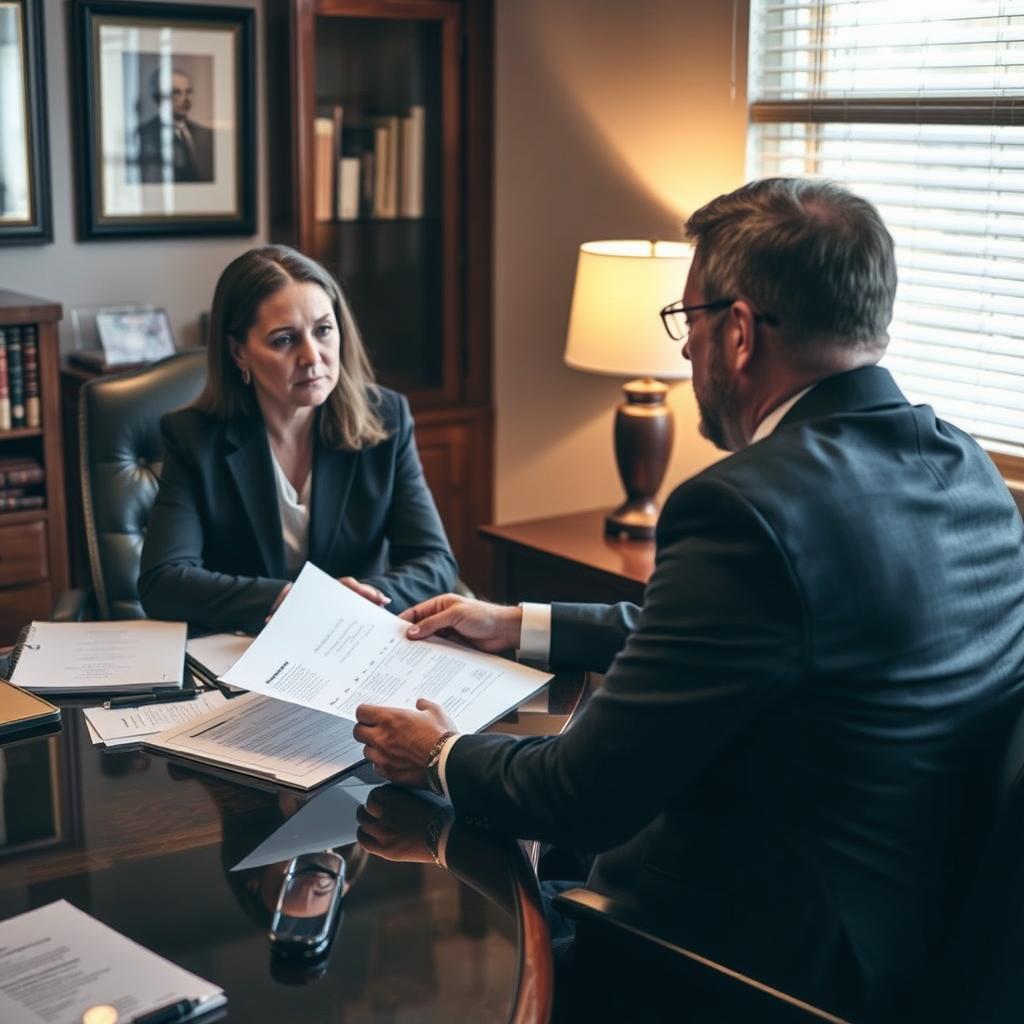
Sex Trafficking of a Minor lawyer James City County, VA
Federal sex trafficking of a minor charges under 18 U.S.C. § 1591 carry the possibility of substantial prison sentences, mandatory minimums, and lifetime sex‑offender registration. In James City County, these charges are not filed in the local General District Court; they are prosecuted by the U.S. Attorney’s Office in the Eastern District of Virginia (EDVA), where conviction rates are significant and the sentencing guidelines are rigid. Law Offices Of SRIS, P.C. represents individuals in Williamsburg, Norge, Toano, Lightfoot, and throughout the county who face federal trafficking allegations. Mr. Sris and the firm’s Of Counsel attorneys appear in the Newport News and Richmond divisions of the EDVA and work to safeguard the rights of the accused at every stage of a federal sex‑trafficking prosecution. If you are under investigation or have been charged, put experienced federal criminal defense counsel on your side. Reach the firm at (888) 437‑7747. Law Offices Of SRIS, P.C. – Advocacy Without Borders.
What Federal Sex Trafficking of a Minor Means in James City County
A federal sex‑trafficking charge is fundamentally different from a state‑court criminal matter. The case is brought by the United States government, investigated by agencies such as the FBI or Homeland Security Investigations, and adjudicated in U.S. District Court. In James City County, that court is the Eastern District of Virginia, which holds proceedings at the Newport News Division or the Richmond Division. The U.S. Attorney’s Office for the EDVA has a reputation for active prosecution of crimes against minors, and a grand‑jury indictment is required before the case can proceed to trial.
The penalties under 18 U.S.C. § 1591 are severe. A conviction can result in a term of imprisonment from ten years to life, depending on the age of the minor, whether force or coercion was involved, and the defendant’s criminal history. Supervised release following incarceration can last for life, and registration under the Sex Offender Registration and Notification Act (SORNA) is mandatory. Because the federal system abolished parole in 1987, any prison sentence imposed will be served day‑for‑day except for limited good‑time credit. The sentencing judge is guided by the U.S. Sentencing Guidelines, which calculate a recommended range based on the offense level and the defendant’s criminal history category. While the guidelines are advisory after United States v. Booker, they exert strong influence on the final sentence. For these reasons, mounting a thorough defense from the earliest stage is critical.
The federal process for a sex‑trafficking case typically includes an initial appearance before a magistrate judge, a detention hearing at which the government may seek pretrial confinement, a preliminary hearing or indictment, arraignment, discovery, motion practice, and potentially a jury trial. Each step demands familiarity with the Federal Rules of Criminal Procedure and the local rules of the EDVA. The firm’s attorneys understand the procedural landscape of the EDVA and are prepared to challenge the government’s evidence, negotiate with federal prosecutors, and, when necessary, present a defense at trial. Information about the U.S. District Court for the Eastern District of Virginia can be found on the court’s official website.
How Mr. Sris and the Firm’s Of Counsel Attorneys Handle Sex Trafficking Cases
Every federal sex‑trafficking case begins with a thorough review of the government’s evidence. The firm’s approach concentrates on identifying weaknesses in the prosecution’s case: scrutinizing the basis for the initial investigation, challenging the admissibility of statements, examining the reliability of witnesses, and evaluating whether law enforcement complied with constitutional requirements. In many federal investigations, cooperating witnesses or confidential informants play a significant role; the firm’s attorneys have experience testing the credibility of such witnesses and exposing biases or motives to fabricate.
Pretrial motion practice is a cornerstone of federal defense work. The firm files motions to suppress evidence obtained in violation of the Fourth Amendment, motions to dismiss the indictment for legal insufficiency, and motions in limine to exclude prejudicial evidence. When the government seeks pretrial detention, the firm advocates for release on the least restrictive conditions, presenting a detailed plan to address any public‑safety or flight‑risk concerns. If a plea offer is tendered, the firm provides a candid evaluation of the strengths and weaknesses of the government’s proof and the likely sentencing exposure, so that the client can make an informed decision. The firm also negotiates for charge bargaining, fact‑stipulation concessions, and sentencing‑recommendation agreements where doing so is in the client’s best interest.
If trial is necessary, the firm’s attorneys prepare each case as though it will be decided by a jury. That means developing a coherent theory of the defense, preparing cross‑examinations of government witnesses, and preparing the client and any defense witnesses to testify credibly and persuasively. The firm also works with investigators, forensic experts, and others when the facts warrant it. In the sentencing phase, the firm presents a comprehensive mitigation package, including documentary evidence and witness testimony, to argue for a sentence below the guideline range when grounds such as acceptance of responsibility, diminished capacity, or other mitigating factors exist.
About Mr. Sris and the Firm’s Of Counsel Attorneys
Mr. Sris, Owner and Founder of Law Offices Of SRIS, P.C., is a former prosecutor who founded the firm in 1997. He is admitted to practice in Virginia, Maryland, the District of Columbia, New Jersey, and New York. Mr. Sris testified before the Virginia House Courts of Justice Committee in support of 2019 HB 635 (chief patron Del. David Bulova). His prosecutorial background gives him insight into how the government constructs a criminal case, and he brings that perspective to every federal matter the firm handles.
The firm’s Of Counsel attorneys bring extensive combined legal experience. Results may vary. The firm has appeared in federal courts throughout Virginia, including the U.S. District Court for the Eastern District of Virginia, and understands the procedural expectations and advocacy standards that federal judges and prosecutors expect. When you retain Law Offices Of SRIS, P.C., you engage a multi‑state defense team that has been protecting clients’ rights in serious federal matters for decades.
Frequently Asked Questions
How does a Virginia lawyer defend against sex trafficking of a minor charges?
Defense strategies in a federal sex‑trafficking case may include challenging the legality of the search or seizure, exposing credibility issues in the government’s witnesses, and attacking the sufficiency of the evidence. The firm examines whether law enforcement followed proper procedures, whether any statements were obtained in violation of Miranda or voluntariness standards, and whether the alleged conduct meets the statutory elements of 18 U.S.C. § 1591. In some cases, the defense may present evidence that the defendant lacked knowledge of the minor’s age or was not involved in a commercial sex act. Each case is fact‑specific, and the firm tailors its strategy accordingly.
What should I do if I am facing sex trafficking of a minor charges in Virginia?
Contact a federal criminal defense attorney immediately and refrain from discussing the allegations with anyone other than your lawyer. Do not speak to law enforcement or federal agents without counsel present. Preserve any records that may be relevant, such as text messages, emails, and social‑media posts, but do not tamper with or destroy evidence. The early stages of a federal investigation are critical; engaging counsel before indictment can influence whether charges are filed and what conditions are set if an arrest occurs.
What is the difference between state and federal charges for sex offenses involving a minor?
Federal charges are prosecuted by the U.S. Attorney’s Office, carry generally harsher penalties, and are governed by the Federal Sentencing Guidelines and mandatory‑minimum statutes. State charges are filed in Virginia General District or Circuit Court and are subject to the Virginia sentencing scheme. Federal jurisdiction often arises when the offense involves interstate commerce, travel, or use of the internet, or when it occurs on federal property. Federal convictions also trigger lifetime SORNA registration and do not allow parole.
How do federal sentencing guidelines work in James City County, Virginia?
The U.S. District Court for the Eastern District of Virginia applies the U.S. Sentencing Guidelines, a points‑based system that considers the offense level and the defendant’s criminal history category to calculate a recommended range. Although the guidelines are advisory since United States v. Booker, they heavily influence the judge’s decision. Mandatory minimums fixed by statute, such as those in 18 U.S.C. § 1591, override any downward guideline departure unless the government files a substantial‑assistance motion or the defendant qualifies for the safety‑valve provision. Acceptance of responsibility can reduce the offense level.
Do I need a federal criminal defense lawyer in James City County, Virginia?
Yes, because federal sex‑trafficking charges are among the most serious offenses in the criminal justice system, and the procedural rules, evidentiary standards, and sentencing framework are distinct from state court. Federal prosecutors are supported by investigative agencies and have substantial resources. An attorney experienced in federal criminal defense knows how to navigate the EDVA’s local rules, negotiate with the U.S. Attorney’s Office, and present a mitigation case at sentencing. Going through a federal prosecution without specialized counsel exposes the accused to the full weight of the government’s case.
Can federal sex trafficking of a minor charges be reduced or dismissed?
It is possible for charges to be reduced or dismissed if the government cannot prove each element of the offense beyond a reasonable doubt or if a constitutional violation taints the evidence. Effective motion practice, such as a motion to suppress evidence, can lead to dismissal if the prosecution’s case is irreparably weakened. Negotiation with the U.S. Attorney’s Office may result in a plea to a lesser offense with a lower sentencing range. Every case is unique; the firm evaluates the specific facts and evidence to determine an appropriate $1 forward.
What is the process for a federal sex trafficking case in the EDVA?
The process generally begins with an investigation by a federal agency, followed by an arrest or a summons, an initial appearance, a detention hearing, a grand‑jury indictment, arraignment, discovery, pretrial motions, and either a plea or trial. If convicted or if a guilty plea is entered, a presentence investigation report is prepared by the probation office, and the court holds a sentencing hearing. Post‑conviction, the defendant may have appeal rights and, in limited circumstances, may seek post‑conviction relief. The entire process can span many months or longer, depending on the complexity of the case.
How do I find a sex trafficking of a minor lawyer in James City County, VA?
Look for an attorney with substantial experience in federal criminal defense, particularly in the U.S. District Court for the Eastern District of Virginia. The attorney should be familiar with 18 U.S.C. § 1591, the U.S. Sentencing Guidelines, and the local rules and practices of the EDVA. Because federal sex‑trafficking cases often involve complex electronic evidence and cooperating witnesses, the attorney should have a track record of handling serious felony cases. To discuss your situation, contact Law Offices Of SRIS, P.C. at (888) 437‑7747.
Additional Resources
Related pages that may be helpful:
- Federal Criminal Lawyer York County, VA
- Federal Criminal Lawyer Williamsburg, VA
- Federal Criminal Lawyer Fairfax County, VA
- Federal Criminal Lawyer Fairfax City, VA
Official primary sources:
- 18 U.S.C. § 1591 – Sex trafficking of children
- U.S. District Court for the Eastern District of Virginia
Attorney advertising. Prior results do not guarantee a similar outcome.
Results may vary.
Case results depend on a variety of factors unique to each case.