
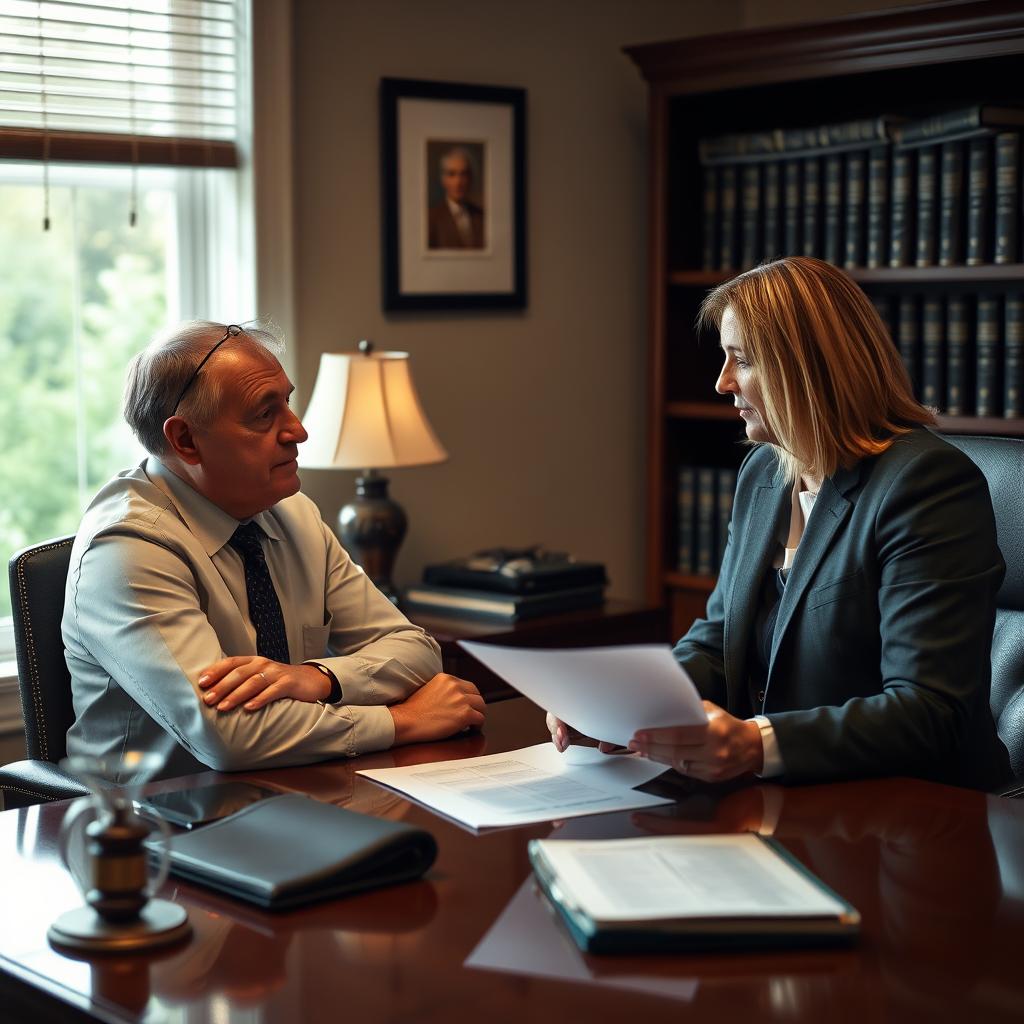
Military Divorce Lawyer Poquoson, VA
Poquoson’s close proximity to Langley Air Force Base and other Hampton Roads military installations means many service members and their families call this Chesapeake Bay community home. When a military marriage faces challenges, the legal framework that governs the divorce is unlike a typical civilian proceeding. Federal laws such as the Servicemembers Civil Relief Act (SCRA) and the Uniformed Services Former Spouses’ Protection Act (USFSPA) overlay Virginia’s equitable-distribution rules, creating a unique set of considerations for child custody, spousal support, and the division of military retired pay. India is not a signatory to the 1980 Hague Convention on Civil Aspects of International Child Abduction. A misstep in any of these areas can affect a service member’s career, security clearance, and financial future. Mr. Sris and his Of Counsel team at Law Offices Of SRIS, P.C. Concentrate on family law matters—including the specialized demands of military divorce—for clients in Poquoson and throughout Virginia. To discuss your situation, call (888) 437-7747. Law Offices Of SRIS, P.C. – Advocacy Without Borders.
What Military Divorce Means in Poquoson
Military divorce in Virginia combines state domestic-relations law with federal protections and obligations that directly affect where and how a case proceeds. Virginia is an equitable-distribution state, so marital property—including military retired pay that meets the USFSPA threshold—is divided fairly, but not necessarily equally, under Va. Code § 20‑107.3. Poquoson family law matters are heard in two courts: the Circuit Court (500 City Hall Avenue) handles the divorce itself, equitable distribution, and spousal support; the Juvenile and Domestic Relations District Court handles separate custody, visitation, and child-support matters. A service member or spouse who files in Poquoson must therefore be prepared to navigate dual-court issues while also addressing SCRA protections that may stay or delay proceedings for active-duty personnel.
Beyond the law, Poquoson’s character as a small, water-oriented city with a significant military population means that local judges and practitioners are accustomed to seeing issues like deployment-related custody modifications, the valuation of a military pension that includes disability offsets, and the interplay between a final decree and the Defense Finance and Accounting Service (DFAS) direct-payment requirements. Working with counsel who understands both the Virginia procedural landscape and the federal overlay helps parties move their case forward without unnecessary procedural setbacks. At Law Offices Of SRIS, P.C., Mr. Sris and his Of Counsel team approach every military divorce with a command of the intersecting statutes, from the grounds for divorce under Va. Code § 20‑91 to the jurisdictional nuances that the SCRA imposes.
How Mr. Sris and His Of Counsel Handle Military Divorce Cases
Every military divorce begins with threshold questions that do not arise in a civilian case: Is the service member on active duty and entitled to a stay? Does the USFSPA’s 10-year overlap rule affect pension division? How will deployment or PCS orders affect a custody schedule? Mr. Sris and his Of Counsel address these questions at the outset, building a strategy that accounts for both the immediate needs—temporary support, pendente lite custody—and the long-term division of assets and parenting responsibilities. Because Virginia courts retain jurisdiction over custody modifications even after a divorce is final, the team structures parenting plans that can adapt to the realities of military life, including re-deployment and changes of station.
When property division involves a military pension, a qualified domestic relations order (QDRO)—or, for federal retirement, a Military Retired Pay Division Order—must be prepared with precision. Mr. Sris, who testified before the Virginia House Courts of Justice Committee in support of 2019 HB 635 (chief patron Del. David Bulova), a bill that revised the equitable-distribution statute governing retirement-plan division, brings firsthand familiarity with the technical drafting requirements. His Of Counsel team, with extensive combined legal experience, reviews every proposed division to ensure it reflects the correct survivor benefit designations and protects the client’s separate property. Results may vary.
The firm also addresses the frequent need to coordinate Virginia proceedings with other states or countries where the parties may have legal ties. Whether a spouse resides overseas or a support order must be enforced across state lines, Mr. Sris and his Of Counsel work to keep the matter moving efficiently while respecting all applicable statutory deadlines and procedural rules.
About Mr. Sris and His Of Counsel Team
Mr. Sris, Owner and Founder of Law Offices Of SRIS, P.C., has practiced since 1997 and is a former prosecutor. His experience includes complex family law matters, equitable distribution of high-value marital estates, and the specialized issues that arise when a military pension or survivor benefit is at stake. His testimony before the Virginia House Courts of Justice Committee on HB 635 reflects a commitment to the substantive law that governs property division in Virginia—a commitment that directly benefits clients whose divorce involves retirement assets.
Mr. Sris is supported by a team of Of Counsel attorneys, each of whom brings a distinct background that strengthens the firm’s ability to handle military divorce. Collectively, Mr. Sris and his Of Counsel bring extensive combined legal experience. They are admitted to practice in Virginia, Maryland, the District of Columbia, New Jersey, and New York, and the firm’s Richmond Location regularly represents clients in Poquoson and throughout the Hampton Roads region. For a consultation about your military divorce matter, call (888) 437-7747.
Frequently Asked Questions
How is a military divorce different from a civilian divorce in Virginia?
A military divorce involves additional federal laws—the Servicemembers Civil Relief Act and the Uniformed Services Former Spouses’ Protection Act—that affect timing, pension division, and jurisdiction. The SCRA allows an active-duty service member to request a stay of proceedings, which can extend the timeline. The USFSPA controls whether a state court may divide military retired pay and how payments are made. Virginia also requires careful coordination between the Circuit Court, which grants the divorce and divides retirement assets, and the Juvenile and Domestic Relations Court, which may handle custody and support. Working with counsel who understands these layers helps ensure that no federal entitlement is overlooked.
Can child custody be modified when a service member is deployed?
Yes, but Virginia courts evaluate custody modifications based on the trusted-interest factors in Va. Code § 20-124.3 and on federal provisions that protect service members from losing custody solely because of deployment. A parent’s deployment or temporary duty assignment is not automatically a material change in circumstances; the court will consider the practical impact and may order a temporary custody arrangement that preserves the parent-child relationship. Once the deployment ends, the pre-existing order generally resumes. An experienced attorney can help draft a parenting plan that explicitly addresses future military obligations, reducing the need for repeated litigation.
What property is divided in a Virginia military divorce?
Marital property—assets acquired during the marriage—is subject to equitable distribution, while separate property such as inheritances or pre-marital assets is generally excluded. Under Va. Code § 20‑107.3, the court classifies and values all assets before dividing them based on statutory factors. Military retired pay that meets the USFSPA requirements is divisible; the portion earned during the marriage is marital property. Disability pay, however, is not divisible under federal law. Because these classifications can be complex, parties often benefit from legal guidance that ensures all eligible assets are identified and properly valued.
What grounds for divorce apply in a Virginia military case?
Virginia recognizes both no-fault and fault grounds for divorce, including a separation period that depends on whether the couple has minor children and a signed separation agreement. Under Va. Code § 20‑91, a no-fault divorce may be available after one year of separation, or after six months if there are no minor children and the parties have a written separation agreement. Fault grounds—such as adultery, cruelty, or desertion—may accelerate the process, but they require proof. The court determines which timeline applies based on the facts of each case, and the SCRA can affect procedural deadlines when a spouse is on active duty.
Do I need an attorney for a military divorce in Poquoson?
Hiring an attorney is not legally required, but a military divorce involves intersecting state and federal rules that are difficult to address without legal representation. Mistakes in the division of a military pension, the application of the SCRA, or the drafting of a parenting plan for a deploying parent can have long-term financial and family consequences. An attorney who is familiar with both the Virginia court system and the federal statutes that apply to service members can help you evaluate your options and work toward a resolution that protects your interests.
For family law matters in other Virginia locations, see our pages on Fairfax County family law, Fairfax City family law, and Falls Church family law.
For official reference, review the Virginia Code Title 20 – Domestic Relations and the Virginia Courts – Poquoson General District Court.
Attorney advertising. Prior results do not guarantee a similar outcome. Results may vary.
Case results depend on a variety of factors unique to each case.