
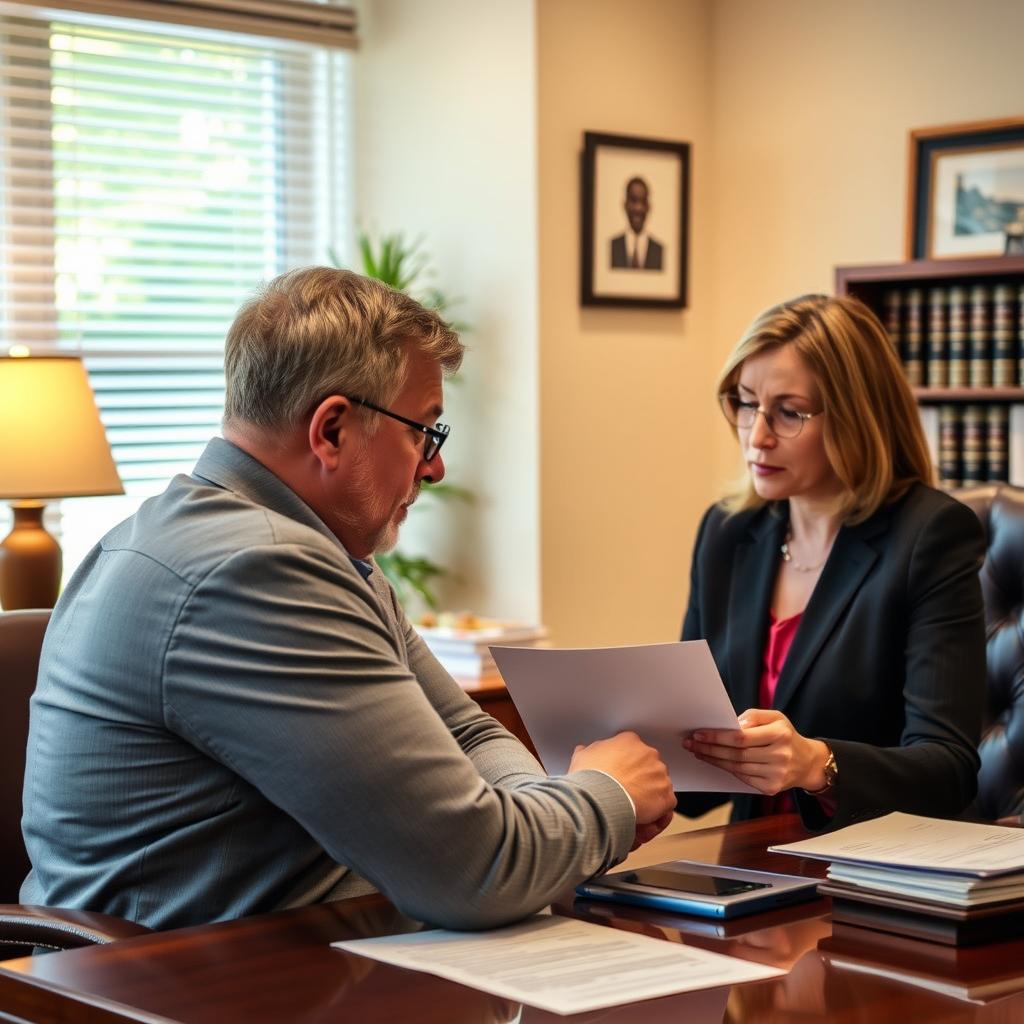
Marital Agreement Lawyer Isle of Wight County, VA
Entering into a marital agreement—whether a prenuptial agreement before marriage or a postnuptial agreement afterward—requires careful legal guidance to ensure the document will be enforceable if it is ever needed. In Isle of Wight County, Virginia, Law Offices Of SRIS, P.C. represents clients in the drafting, review, and enforcement of marital agreements. Mr. Sris and his Of Counsel team bring multi-state experience to family law matters, helping individuals and couples protect their assets and clarify financial expectations under Virginia law. Isle of Wight County Circuit Court, located at 17122 Monument Circle, Suite A, Isle of Wight, Virginia, is the court where disputes concerning marital agreements are typically heard, and familiarity with local court practices is an important part of effective representation. To discuss a prenuptial or postnuptial agreement, call (888) 437-7747. Law Offices Of SRIS, P.C. – Advocacy Without Borders.
What Marital Agreements Mean in Isle of Wight County, Virginia
A marital agreement is a contract between spouses or intending spouses that addresses property division, spousal support, and other financial rights in the event of divorce or death. In Virginia, these agreements are governed by the Premarital Agreement Act (Va. Code § 20‑147 et seq.). The statute sets out requirements for a valid agreement, including that it must be in writing, signed by both parties, and entered into voluntarily with a fair and reasonable disclosure of each party’s financial situation.
Residents of Isle of Wight County—including the communities of Smithfield, Windsor, and Carrollton—who are considering a marital agreement should understand how Virginia equitable distribution law interacts with such contracts. Virginia is not a community property state; instead, courts divide marital property equitably under Va. Code § 20‑107.3. A properly drafted marital agreement can override the default equitable distribution rules, providing certainty about how assets will be divided. Mr. Sris and his Of Counsel work with clients to craft agreements that reflect their intentions while meeting Virginia’s enforceability standards.
How Mr. Sris and His Of Counsel Handle Marital Agreement Cases
Our approach to marital agreements begins with a thorough consultation to understand the client’s objectives and financial picture. Mr. Sris and his Of Counsel review existing assets, anticipated inheritances, business interests, and retirement accounts, then explain how Virginia law would treat those items absent an agreement. This allows the client to make informed decisions about the terms they want to include.
When drafting a prenuptial or postnuptial agreement, the attorneys focus on clarity, completeness, and compliance with Virginiainia’s statutory requirements. Both parties should have the opportunity to consult independent counsel, and full financial disclosure is essential. If a dispute arises—for example, if one party later challenges the validity of the agreement—Law Offices Of SRIS, P.C. represents clients in enforcement or defense proceedings in the Isle of Wight County Circuit Court. The timeline for resolving such disputes depends on the complexity of the issues and the court’s calendar.
About Mr. Sris and His Of Counsel Team
Mr. Sris, Owner and Founder of Law Offices Of SRIS, P.C., is a former prosecutor who has been practicing since 1997. His experience in trial work informs his approach to family law, including marital agreements that may later be the subject of litigation. Mr. Sris testified before the Virginia House Courts of Justice Committee in support of 2019 HB 635 (chief patron Del. David Bulova), legislation that addressed part of Virginia’s equitable distribution statute.
Mr. Sris and his Of Counsel bring experienced, multi-state representation to family law matters. They are admitted in Virginia, Maryland, the District of Columbia, New Jersey, and New York, and the firm offers consultations in English, Spanish, and Tamil. Our Richmond location serves clients throughout Isle of Wight County, and appointments are available by calling (888) 437-7747.
Frequently Asked Questions
What is a marital agreement in Virginia?
A marital agreement is a written contract between spouses or intended spouses that determines how property, debts, and spousal support will be handled if the marriage ends, governed by Virginia’s Premarital Agreement Act, Va. Code § 20‑147 et seq. Prenuptial agreements are executed before marriage, while postnuptial agreements are executed after the wedding. Both types of agreements allow couples to override Virginia’s default equitable distribution rules, provided the agreement meets statutory requirements for voluntariness and disclosure.
Do I need a lawyer for a prenuptial agreement in Isle of Wight County?
Virginia law does not require each party to retain a lawyer, but having independent legal advice greatly increases the likelihood that a prenuptial agreement will be found enforceable if it is ever challenged. A court will examine whether the agreement was entered into voluntarily and with adequate financial disclosure. An experienced family law attorney can explain the legal effect of the agreement, ensure that your rights are protected, and help avoid drafting errors that could lead to invalidation.
Can a postnuptial agreement be enforced in Virginia?
Yes, a postnuptial agreement—also covered by the Premarital Agreement Act—can be enforced in Virginia if it meets the same standards of voluntariness, disclosure, and fairness that apply to prenuptial agreements. Postnuptial agreements are often used when a couple’s financial circumstances change during the marriage, such as after receiving an inheritance or starting a business. A well-drafted postnuptial agreement can provide clarity and reduce conflict in the event of a later separation.
What makes a marital agreement invalid in Virginia?
A Virginia court may set aside a marital agreement if it finds that a party did not enter into the agreement voluntarily, or if the agreement was unconscionable when executed and the challenging party did not receive adequate financial disclosure. Other grounds for invalidity can include fraud, duress, or a failure to meet the statutory requirement that the agreement be in writing and signed by both parties. Because these standards are fact‑specific, having an attorney review the agreement is prudent.
How does a marital agreement affect property division in a divorce?
A valid marital agreement typically replaces Virginia’s equitable distribution rules for the property it covers, directing how assets, debts, and spousal support will be divided instead of leaving those decisions to the court. Without an agreement, marital property is divided equitably under Va. Code § 20‑107.3 based on a list of statutory factors. An enforceable agreement allows the couple to determine their own allocation, which can streamline the divorce process and reduce uncertainty.
Where are marital agreement disputes heard in Isle of Wight County?
Disputes concerning the validity or enforcement of a marital agreement are generally heard in the Isle of Wight County Circuit Court, located at 17122 Monument Circle, Suite A, Isle of Wight, Virginia. The Circuit Court has jurisdiction over divorce actions and all related matters, including challenges to prenuptial or postnuptial agreements. Matters that involve only child custody or support may be assigned to the Isle of Wight County Juvenile and Domestic Relations District Court, but the core contractual dispute typically remains in the Circuit Court.
For family law assistance in nearby areas, see our Fairfax County family law representation, Prince William County family law assistance, and Manassas family law legal help.
For the full text of Virginia’s governing statute, consult the Virginia Premarital Agreement Act (Va. Code § 20‑147 et seq.). General information about circuit court operations is available at the Virginia Judicial System website.
Reviewed by Mr. Sris, Owner and Founder
Admitted in Virginia, Maryland, District of Columbia, New Jersey, and New York
Practicing since 1997
Attorney advertising. Prior results do not guarantee a similar outcome.
Case results depend on a variety of factors unique to each case.