
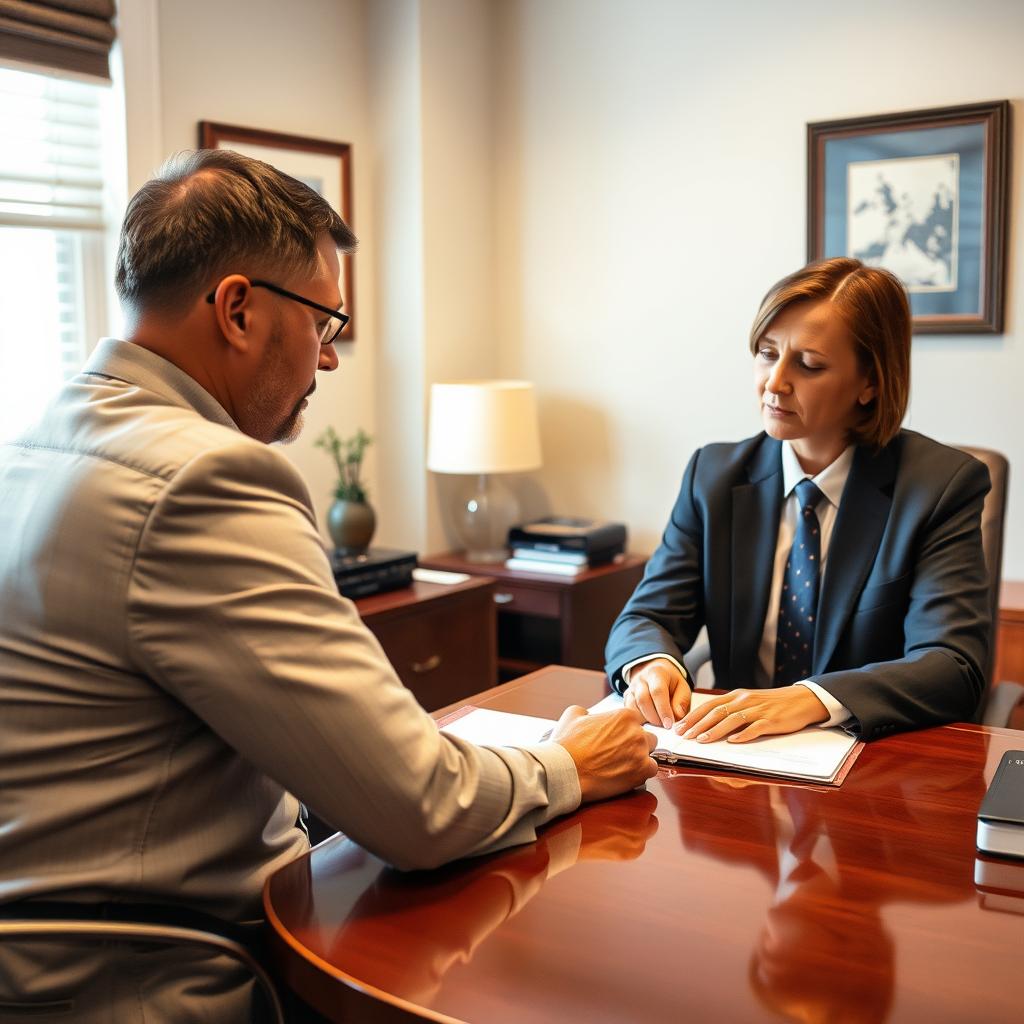
Espionage lawyer Poquoson, VA
Federal espionage charges under 18 U.S.C. § 793 et seq. – the Espionage Act – are among the most serious accusations the government can bring. When the FBI or other federal agencies investigate the gathering, transmission, or loss of classified national-defense information, the consequences for a defendant can include decades in prison or, in extreme cases, life imprisonment or the death penalty. For anyone in Poquoson, Virginia, who is contacted by federal investigators or indicted, the need for an experienced federal criminal defense attorney is immediate. Law Offices Of SRIS, P.C. represents clients in Poquoson and throughout the Hampton Roads region in federal court, including the Eastern District of Virginia’s Newport News Division. Mr. Sris, the firm’s Owner and Founder, and the firm’s Of Counsel attorneys understand the high stakes of a federal espionage prosecution and the active tactics employed by the U.S. Attorney’s Office. To speak with an experienced lawyer about your situation, call (888) 437-7747. Law Offices Of SRIS, P.C. – Advocacy Without Borders.
What Espionage Means in Poquoson
Federal espionage is not a charge that originates in the Poquoson General District Court. Because espionage is a violation of federal, not state, law, all proceedings occur in the U.S. District Court for the Eastern District of Virginia. The nearest federal courthouse for a Poquoson resident is the Newport News Division at 2400 West Avenue, Newport News, VA 23607. The case will be prosecuted by an Assistant United States Attorney, often in coordination with the Justice Department’s National Security Division. Investigations frequently involve the FBI, the Naval Criminal Investigative Service given the area’s heavy military presence, and other intelligence agencies. The Eastern District of Virginia has a reputation for moving cases quickly, and its judges are experienced in handling classified information under the Classified Information Procedures Act.
An espionage charge under the Espionage Act can stem from a wide range of conduct: copying, transmitting, or delivering national-defense information to a foreign nation; photographing or sketching military installations or vessels; receiving or possessing such materials with reason to believe they will harm the United States; or, under certain provisions, losing classified documents through gross negligence. The statutes cover both traditional spying and more modern scenarios involving unauthorized digital access. Because Poquoson is adjacent to Langley Air Force Base, NASA facilities, and other defense infrastructure, local residents with security clearances can inadvertently become the focus of a counterintelligence investigation. Even a seemingly routine conversation with a foreign contact can draw scrutiny. When you face such a charge, an experienced federal criminal lawyer must quickly intervene to protect your rights during the investigative and pre-indictment phases.
How Mr. Sris and the Firm’s Of Counsel Attorneys Handle Espionage Cases
Defending a federal espionage charge requires a multi-layered strategy that begins as soon as the individual becomes aware of the investigation. Mr. Sris and the firm’s Of Counsel attorneys take immediate steps: advising the client to decline interviews without counsel present, preserving electronic and physical evidence, and communicating with federal agents to determine the scope of the inquiry. In many cases, the goal is to prevent an indictment entirely by presenting exculpatory information to the U.S. Attorney’s Office during the grand-jury phase. If an indictment is returned, the defense team challenges the government’s evidence at every stage – from motions to suppress unlawfully obtained surveillance records to rigorous classification reviews under CIPA. The firm’s attorneys also evaluate the viability of entrapment defenses, lack of intent, or public-authority defenses where the client acted under official authorization.
Throughout pre-trial proceedings, Mr. Sris and the firm’s Of Counsel attorneys engage in negotiations with prosecutors, focusing on potential charge reductions, the exclusion of certain classified evidence, and the calculation of the advisory sentencing-guideline range. Federal sentencing for espionage is severe and includes no parole; every mitigation argument, including cooperation under U.S.S.G. § 5K1.1 or Rule 35 motions, must be carefully considered. Should the case proceed to trial, the firm’s trial lawyers are prepared to cross-examine government agents, challenge the chain of custody of classified materials, and present expert testimony on the nature of the information at issue. The complexity of these cases demands the firm’s concentrated preparation and the ability to manage voluminous discovery, often under protective order.
About Mr. Sris and the Firm’s Of Counsel Attorneys
Mr. Sris, Owner and Founder of Law Offices Of SRIS, P.C., is a former prosecutor who has practiced in federal courts across Virginia since founding the firm in 1997. He is admitted to the bars of Virginia, Maryland, the District of Columbia, New Jersey, and New York, giving the firm the ability to coordinate with counsel across multiple jurisdictions if an espionage investigation crosses state lines. Mr. Sris testified before the Virginia House Courts of Justice Committee in support of 2019 HB 635 (chief patron Del. David Bulova). His personal focus on complex federal matters means that each espionage case receives direct, individual case review from an attorney with decades of experience in the Eastern District of Virginia.
The firm’s Of Counsel attorneys bring significant experience in federal criminal defense and procedure. Together with Mr. Sris, they form a multi-state defense team that evaluates every aspect of the government’s case and looks for weaknesses in the indictment, the investigation, and the prosecution’s interpretation of the Espionage Act. The firm’s Richmond location serves clients throughout Poquoson and the broader Hampton Roads community. To discuss your situation with Mr. Sris and the firm’s Of Counsel attorneys, call (888) 437-7747.
Frequently Asked Questions
What is federal espionage under 18 U.S.C. § 793?
Federal espionage under 18 U.S.C. § 793 et seq. Involves gathering, transmitting, or losing control of information related to the national defense that could be used to injure the United States or benefit a foreign nation. The Espionage Act encompasses a broad array of activities, from classic spying – copying and delivering military plans, codes, or photographs to a foreign government – to the unauthorized possession, retention, or grossly negligent loss of classified materials. The government does not need to prove the information actually harmed the country; it is sufficient that the defendant had reason to believe the information could be so used. Penalties range from up to ten years’ imprisonment for certain mishandling offenses to death or life imprisonment for the most serious acts of espionage.
How does a Virginia lawyer defend against espionage charges?
Defense strategies in federal espionage cases typically involve challenging the government’s evidence, asserting constitutional violations, and contesting whether the information qualifies as “national defense” material. An experienced federal attorney will scrutinize the search warrants, electronic-surveillance authorizations, and interrogation methods to identify Fourth and Fifth Amendment violations that could justify suppression of evidence. The defense may argue that the materials were not “closely held” by the government or were already in the public domain, thus not covered by the Espionage Act. In some cases, a public-authority or entrapment defense is available. Negotiation with prosecutors is critical; an attorney may seek to reduce the charge to a lesser offense or secure a favorable plea agreement that limits exposure at sentencing.
What should I do if I am facing espionage charges in Poquoson?
If you are under investigation for or have been charged with espionage in the Poquoson area, do not speak with law enforcement or anyone else about the case except your attorney; preserve all documents, communications, and devices. Contact an experienced federal criminal lawyer immediately. Federal agents often try to interview suspects before an attorney is present; you have the right to remain silent and the right to have counsel present during any questioning. Do not attempt to explain your actions or provide documents without legal advice, as even innocent statements can be used against you. The statute of limitations and court deadlines in a federal case require prompt action to preserve defenses.
Do I need a lawyer for federal espionage charges?
Yes – the consequences of a federal espionage conviction are so severe and the pretrial procedures so complex that self-representation is extremely risky. The U.S. Attorney’s Office for the Eastern District of Virginia brings espionage cases with the full resources of the Justice Department and often the intelligence community. A defendant needs a lawyer who understands the Classified Information Procedures Act, the Federal Rules of Criminal Procedure, and the Federal Sentencing Guidelines. An experienced defense attorney can file motions to dismiss, engage in plea negotiations, and mount a vigorous trial defense if necessary. The firm’s attorneys can also recommend attorneys in fields such as national security classification and digital forensics to support the defense.
What is the difference between state and federal criminal charges?
Federal charges are prosecuted by the U.S. Attorney in federal court, carry generally harsher penalties, and offer no possibility of parole, whereas state charges are handled by local prosecutors in state courts and often allow for earlier release. Espionage is exclusively a federal offense; it cannot be charged in state court. All aspects of the case — from the grand-jury process to the trial to any appeal — unfold under federal rules of evidence and procedure. Federal investigations also tend to be more resource-intensive, involving agencies like the FBI and multiple U.S. Attorneys. An attorney who practices in federal court in the Eastern District of Virginia understands the local rules and the expectations of the judges in that district.
How much does a federal espionage lawyer cost?
The cost of legal representation for a federal espionage case varies widely depending on the complexity of the matter, the length of the proceedings, and the level of attorney involvement required. Because espionage cases often involve thousands of pages of classified discovery, multiple pretrial motions, and potentially a lengthy trial, fees reflect the substantial time and resources needed. Law Offices Of SRIS, P.C. offers consultations to discuss the specifics of your situation and to determine how the firm can assist. To request a consultation, call (888) 437-7747.
Additional Federal Criminal Defense Resources
For representation in other Virginia localities, see our pages for Federal Criminal Lawyer Fairfax County, Federal Criminal Lawyer Fairfax City, Federal Criminal Lawyer Falls Church, and Federal Criminal Lawyer Prince William County.
Primary Legal Authority
18 U.S.C. § 793 et seq. – Espionage Act
U.S. District Court for the Eastern District of Virginia
Attorney advertising. Prior results do not guarantee a similar outcome.
Results may vary.
Case results depend on a variety of factors unique to each case.