
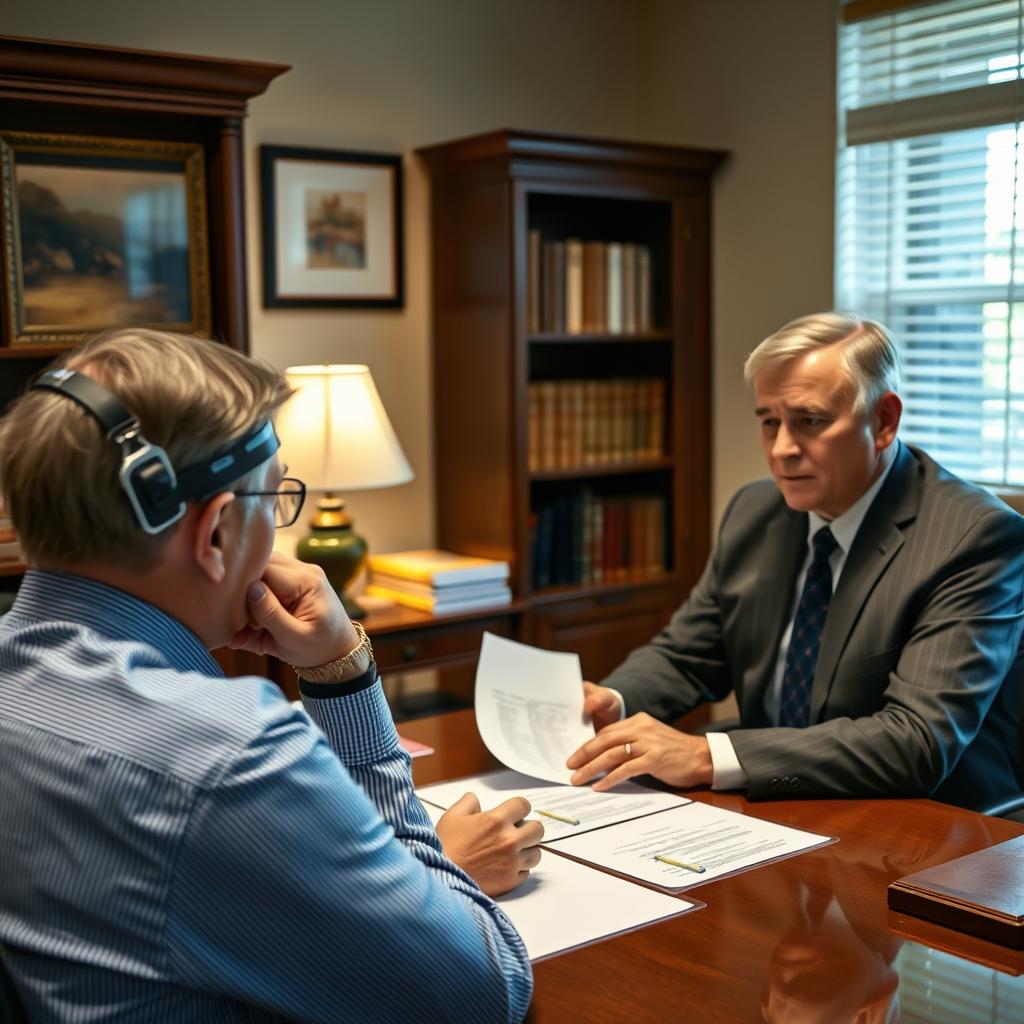
Distribution/Receipt of Child Pornography lawyer Isle of Wight County, VA
A charge of distribution or receipt of child pornography in Isle of Wight County triggers a federal prosecution in the U.S. District Court for the Eastern District of Virginia (EDVA). Cases from Smithfield, Windsor, Carrollton, and throughout the county are typically heard at the Newport News Division, located at 2400 W Avenue, Newport News, VA 23607. Federal child exploitation offenses are investigated by agencies such as the FBI, Homeland Security Investigations, and the U.S. Postal Inspection Service, and they are pursued actively by the U.S. Attorney’s Office. A conviction under 18 U.S.C. § 2252 carries a mandatory minimum prison sentence of five years for a first offense of receipt or distribution, along with a term of supervised release and lifetime registration as a sex offender. There is no parole in the federal system. These prosecutions unfold under the Federal Rules of Criminal Procedure and the U.S. Sentencing Guidelines—procedural frameworks that differ markedly from state court practice. Mr. Sris, a former prosecutor and Owner and Founder of Law Offices Of SRIS, P.C., concentrates his practice on federal criminal defense and represents clients throughout Virginia, including Isle of Wight County. The firm’s Of Counsel attorneys also bring extensive collective experience in criminal litigation. If you or a family member is facing a federal child-pornography investigation or indictment, contact the firm at (888) 437‑7747 to schedule a consultation. Prompt intervention by defense counsel often shapes the direction of a federal case before an indictment is returned. Law Offices Of SRIS, P.C. – Advocacy Without Borders.
What Federal Distribution/Receipt of Child Pornography Charges Mean in Isle of Wight County, Virginia
Federal jurisdiction over child-pornography offenses typically arises because the material is transmitted over the internet or through the mail, satisfying the interstate-commerce element required under 18 U.S.C. § 2252. The United States Attorney’s Office for the Eastern District of Virginia prosecutes these cases with substantial resources, including digital-forensics attorneys and multi-agency task forces. A defendant in Isle of Wight County will appear before a federal magistrate judge in Newport News for an initial appearance and detention hearing, and eventually before a district judge for trial or sentencing. Because federal court operates under the Federal Rules of Evidence and the federal sentencing guidelines, the expectations regarding discovery, motion practice, and plea negotiations differ from those in Virginia’s state courts. The Speedy Trial Act imposes its own timing obligations, but complex digital-evidence cases often involve pretrial motions that extend the litigation timeline.
For someone living in Isle of Wight County—a community anchored by Smithfield, Windsor, and Carrollton—the reality of a federal indictment is disorienting. The local courthouse on Monument Circle handles only Virginia state matters; all federal proceedings will take place in Newport News or Norfolk. The federal government’s prosecutorial posture in the EDVA is historically rigorous, and sentences in the federal system are driven by a points-based calculation under the U.S. Sentencing Guidelines, with mandatory minimums that the judge cannot go below absent a government motion for substantial assistance. Having counsel who appreciates both the geographic distance and the procedural stakes helps defendants and their families navigate what is often a multi-year process.
How Mr. Sris and the Firm’s Of Counsel Attorneys Defend Federal Child Pornography Cases
Defense of a federal distribution or receipt charge begins with a thorough review of the government’s investigative steps. Mr. Sris and the firm’s Of Counsel attorneys scrutinize the search warrant application, the affidavit supporting it, and the manner in which digital evidence was seized and preserved. Federal agents typically rely on IP‑address tracing, peer‑to‑peer network monitoring, or undercover operations conducted by the FBI’s Child Exploitation Task Force. Any weakness in the probable‑cause showing or in the handling of electronic media can form the basis of a motion to suppress. The team also works to present mitigation evidence to the U.S. Attorney’s Office before a charging decision is made, a period when persuading the government not to seek a mandatory minimum or to narrow the charges is often most effective.
Once the case is in an indictment or information posture, the firm’s approach concentrates on constructing a defense strategy tailored to the individual client. That may involve challenging computer‑forensic findings through independent experienced attorney review, contesting the government’s chain of custody for digital exhibits, or negotiating a plea that avoids the most severe sentencing enhancements. Because the federal sentencing guidelines punish certain conduct—such as the use of a computer, the number of images, or the age of the depicted minors—with offense‑level increases, a detailed understanding of guideline calculations is essential. Mr. Sris and the firm’s Of Counsel attorneys prepare for sentencing by presenting a comprehensive picture of the client’s background, acceptance of responsibility, and any applicable grounds for a downward departure under the guidelines. While no attorney can guarantee a particular outcome, the firm works to achieve the most favorable resolution possible under the facts of each case.
About Mr. Sris and the Firm’s Of Counsel Attorneys
Mr. Sris is the Owner and Founder of Law Offices Of SRIS, P.C. A former prosecutor, he has concentrated his practice on criminal defense since 1997 and is admitted in Virginia, Maryland, the District of Columbia, New Jersey, and New York. His familiarity with how federal prosecutors build their cases—drawn from his own experience as a prosecutor—informs the firm’s strategy in federal child‑pornography matters. Mr. Sris testified before the Virginia House Courts of Justice Committee in support of 2019 HB 635 (chief patron Del. David Bulova). He is supported by the firm’s Of Counsel attorneys, whose collective backgrounds include former prosecution and law‑enforcement service. Mr. Sris and the firm’s Of Counsel attorneys bring extensive combined legal experience. Results may vary.
The firm’s Of Counsel attorneys have long‑standing experience appearing before the U.S. District Court for the Eastern District of Virginia. They are familiar with the local practices of the Newport News division and with the federal magistrate and district judges who sit in that courthouse. Because the firm maintains a Richmond location—7400 Beaufont Springs Drive, Suite 300, Room 395, Richmond, VA 23225—clients in Isle of Wight County have ready access to counsel who can meet them at a convenient location while representation proceeds in the federal forum. The team works on a collaborative model: Mr. Sris oversees the defense strategy, and the Of Counsel attorneys handle motions, hearings, and client communication, ensuring that every aspect of the case receives sustained attention.
Frequently Asked Questions
What is the mandatory minimum sentence for distribution or receipt of child pornography under federal law?
A first‑offense conviction for receipt or distribution of child pornography under 18 U.S.C. § 2252 carries a mandatory minimum sentence of five years in federal prison. The court may also impose a term of supervised release and order restitution to victims. Because there is no parole in the federal system, an inmate will serve at least 85 percent of the imposed sentence, with limited good‑time credit. Sentencing enhancements can increase the guideline range based on the nature and volume of the images. The actual sentence depends on the offense level calculated under the U.S. Sentencing Guidelines and the defendant’s criminal history category.
How do federal sentencing guidelines work for child pornography offenses in the Eastern District of Virginia?
The federal sentencing guidelines assign a base offense level, which is then increased by specific offense characteristics such as the use of a computer, the number of images, and the age of the depicted minors. The final offense level, combined with the defendant’s criminal history category, yields a recommended range of months. While the guidelines are advisory after United States v. Booker (2005), federal judges in the EDVA give them considerable weight. Mandatory minimum statutes, including the five‑year floor for receipt or distribution, override the guideline range when it would produce a lower sentence. Only a government motion for substantial assistance under § 5K1.1 can allow the court to go below a mandatory minimum.
What is the difference between state and federal child pornography charges in Virginia?
Federal child pornography charges are prosecuted in U.S. District Court by the United States Attorney and carry mandatory minimum prison terms, while Virginia state charges are prosecuted in the Commonwealth’s courts and generally do not carry federal‑style mandatory minimums. Federal cases also involve the U.S. Sentencing Guidelines, no parole, and a more complex discovery and motion practice. State charges under Virginia law—such as possession of child pornography under Va. Code § 18.2‑374.1:1—can result in significant prison time as well, but the procedural environment and the prosecutorial resources differ substantially. An attorney with experience in both systems can identify where a case is most likely to proceed and what defense options are available.
What should I do if federal agents contact me about child pornography allegations?
You should not make any statement to federal agents without counsel present, even if they suggest you are not a target. Federal investigators—whether from the FBI, HSI, or Postal Inspection Service—may use an interview to gather inculpatory statements that can then support a search warrant or an indictment. Politely decline to answer questions, state that you wish to speak with a lawyer, and contact defense counsel immediately. Do not delete any files, destroy devices, or attempt to contact witnesses. Spoliation of evidence can result in obstruction charges. Early legal representation helps ensure your rights are protected during the pre‑charge investigation.
Can federal child pornography charges be dismissed?
Yes, federal child pornography charges can be dismissed if the government’s evidence is obtained through an unconstitutional search or if the prosecution cannot meet its burden of proof. Common pretrial motions challenge the sufficiency of the search‑warrant affidavit or argue that the forensic examination exceeded the warrant’s scope. In some cases, a negotiated resolution may result in charges being reduced or, if the evidence is weak, the government may dismiss the indictment. Dismissal is not the typical outcome, and each case depends on its specific facts, but experienced federal defense counsel will explore every avenue to challenge the government’s proof before trial.
Why is it important to hire a federal criminal defense attorney for an Isle of Wight County case?
Federal court operates under a distinct set of procedural rules, evidence standards, and sentencing guidelines that differ from state court, making representation by an attorney who routinely handles federal cases essential. Isle of Wight County federal cases are litigated in the Newport News division of the U.S. District Court for the Eastern District of Virginia, which has local rules and judicial practices that a state‑court practitioner may not know well. A federal defense attorney understands pretrial detention standards under the Bail Reform Act, the mechanics of the Speedy Trial Act, and the sentencing‑guideline departures that can reduce exposure. Early engagement by counsel familiar with the federal system improves the ability to respond effectively to a grand‑jury investigation or an indictment.
Also Serving Nearby Localities
Fairfax County Federal Criminal Lawyer |
Prince William County Federal Criminal Lawyer |
Manassas Federal Criminal Lawyer |
Falls Church Federal Criminal Lawyer
Primary Legal Resources
U.S. District Court for the Eastern District of Virginia |
Virginia’s Judicial System
Attorney advertising. Prior results do not guarantee a similar outcome. Results may vary.
Case results depend on a variety of factors unique to each case.