
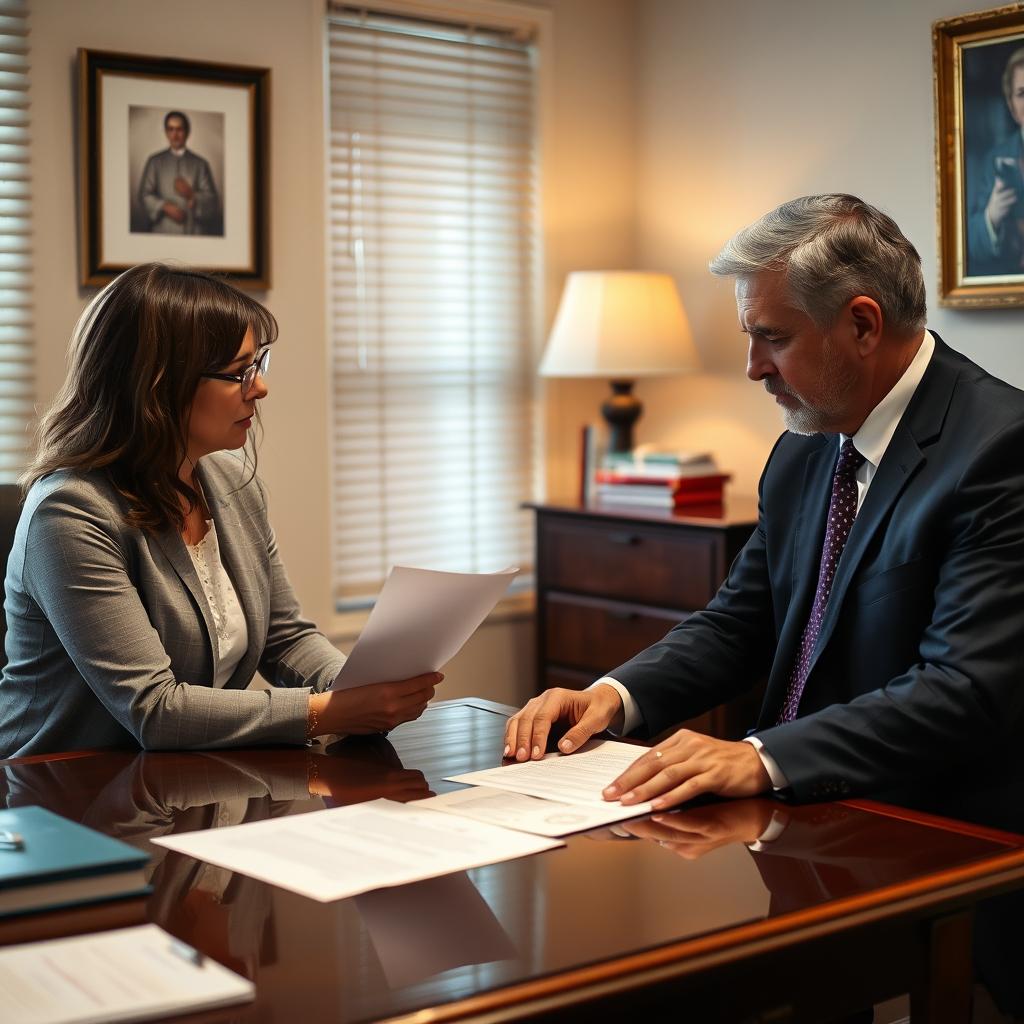
Catholic Annulment Lawyer Poquoson, VA
When Michael and Anna stood before their priest in Poquoson, they carried a heavy question no couple wants to face: could their marriage, already civilly dissolved, be declared null in the eyes of the Church so that both could move forward in their faith? They needed not just a divorce attorney but someone who understood the intersection of Virginia civil annulment law and the Catholic canonical process. If you are in Poquoson or the surrounding Tidewater communities and you are asking a similar question, Mr. Sris and his Of Counsel at Law Offices Of SRIS, P.C. are available to discuss your situation. Reach our firm at (888) 437-7747 to request a consultation. Law Offices Of SRIS, P.C. – Advocacy Without Borders.
Understanding Catholic Annulment in Poquoson, Virginia
A Catholic annulment is actually two distinct proceedings—one civil and one religious. The civil side takes place in the Virginia courts and is governed by Va. Code § 20‑89.1. A civil annulment declares that no valid marriage ever existed because of a defect at the time the marriage was contracted. The Church’s annulment process, handled through the diocesan tribunal, investigates the sacrament’s validity under canon law. While a civil annulment can be pursued independently of the Church process, many couples in Poquoson seek both because remarriage in the Church typically requires a declaration of nullity.
In Poquoson, civil annulment petitions are filed in the Poquoson Circuit Court at 500 City Hall Avenue, Poquoson, VA 23662. Because Poquoson is a small independent city, its docket is managed by the Eighth Judicial District, and hearings are scheduled around the court’s calendar. Our firm’s Richmond Location regularly serves clients in Poquoson and appears before the Circuit Court for family law matters. This local familiarity helps avoid procedural missteps that can delay an annulment—or, worse, cause it to be dismissed.
What to Expect When You Pursue a Civil Annulment
The annulment process begins with filing a Complaint in the Circuit Court. Virginia law requires that at least one party has been a bona fide resident and domiciliary of the Commonwealth for six months before filing (Va. Code § 20‑97). The grounds you assert will shape the entire case. Common civil grounds for annulment in Virginia include bigamy (one spouse already married), impotence existing at the time of marriage and unknown to the other party, conviction of a felony before marriage without the other party’s knowledge, fraud or duress going to an essential element of the marriage, and mental incapacity at the time of the ceremony. Unlike a divorce, which dissolves a valid marriage, an annulment treats the marriage as void from the beginning.
What you must prove and the evidence required depends heavily on the ground pleaded. A fraud-based annulment, for example, may require documentation and testimony showing that a material misrepresentation induced the marriage. The timeline varies by case complexity and court scheduling—there is no fixed day-count. If the other spouse contests the annulment, the proceeding becomes adversarial and will involve discovery, possible depositions, and a trial. Mr. Sris and his Of Counsel guide clients through each phase, building the evidentiary record the court needs without over-litigating the issues.
How an Annulment Differs from a Divorce in Virginia
Many Poquoson residents assume an annulment is simply a “Catholic divorce.” Legally, the distinction is profound. A divorce ends a valid marriage and divides marital property under Virginia’s equitable‑distribution framework (Va. Code § 20‑107.3). An annulment, by contrast, declares that no valid marriage ever existed. This can dramatically alter property rights: there is no marital estate to divide if there was no marriage. Each party generally retains what they brought into the relationship, though the court may still address the equitable division of jointly titled property. The annulment statute, Va. Code § 20‑89.1, does not provide for spousal support in the same way a divorce does. Understanding these differences before filing is critical—filing under the wrong theory can forfeit important rights.
Because of these distinctions, Mr. Sris and his Of Counsel work closely with clients to evaluate whether annulment is legally achievable and whether it aligns with the client’s broader goals. In some cases, a no‑fault divorce followed by a separate Church annulment is the more practical path. In others, the civil annulment and the ecclesiastical annulment can proceed in parallel with careful coordination between the civil attorney and the canon law advocate.
How Mr. Sris and His Of Counsel Handle Catholic Annulment Cases
Mr. Sris founded Law Offices Of SRIS, P.C. in 1997 and has concentrated his practice on family law matters, including annulments, for decades. He works alongside a team of Of Counsel who bring experience from multiple legal backgrounds—including a former Virginia State Trooper who understands how to develop evidence and examine witnesses, and attorneys with substantial trial and negotiation experience. This collaborative approach means the client’s case is reviewed through multiple lenses: statutory requirements, evidentiary strength, and the practical realities of the Poquoson Circuit Court.
The firm’s process starts with a thorough consultation where we listen to your situation and explain which grounds may apply. We then gather the necessary documents—marriage certificate, evidence supporting the ground, and any relevant Church tribunal materials—before drafting and filing the Complaint. Throughout the process, we communicate with you about what to expect, how to prepare for testimony, and what documents the court will require. While we cannot guarantee a particular outcome, we work to present the case in a way that gives the court the information it needs to grant the annulment where the evidence supports it. For a full statutory analysis of Virginia family law grounds, see our comprehensive guide.
About Mr. Sris and the Firm’s Family Law Team
Mr. Sris, Owner and Founder of Law Offices Of SRIS, P.C., is a former prosecutor who has practiced family law since 1997. He is admitted in Virginia, Maryland, the District of Columbia, New Jersey, and New York. In addition to his extensive courtroom experience, Mr. Sris testified before the Virginia House Courts of Justice Committee in support of 2019 HB 635 (chief patron Del. David Bulova), a bill that improved the equitable‑distribution framework used in Virginia divorce and annulment‑related property matters. His understanding of how the law is shaped and applied gives clients a strategic advantage when navigating sensitive family law proceedings.
Mr. Sris’s Of Counsel contribute additional knowledge and investigative skill. This includes an attorney with 15 years of prior service as a Virginia State Trooper—experience that sharpens the team’s ability to assess witness credibility, identify inconsistencies in testimony, and develop the factual record that a court needs in a contested annulment. The team works collectively on every matter, drawing on the strengths that each Of Counsel brings to the table.
Frequently Asked Questions
What grounds for annulment exist under Virginia law?
Virginia recognizes several grounds for civil annulment under Va. Code § 20‑89.1, including bigamy, impotence, felony conviction without disclosure, fraud, duress, and mental incapacity. Each ground requires specific proof. For example, a fraud‑based annulment requires showing that a material misrepresentation induced the marriage and that the innocent party would not have consented had the truth been known. An experienced family law attorney can evaluate which ground best fits your circumstances and whether the evidence is likely to meet the court’s standard. Because annulments are fact‑intensive, early consultation helps you understand the viability of your claim before you invest time and expense in litigation.
Do I need both a civil annulment and a Church annulment?
Yes, they are separate processes with different requirements. A civil annulment ends the legal marriage in the eyes of the state, while a Church annulment addresses the sacrament’s validity under canon law. Many Poquoson residents who seek a Catholic annulment have already obtained a civil divorce. If you need both, the civil proceeding can be filed while the ecclesiastical process is underway, but coordination is important. Your civil attorney and your canon law advocate should communicate to avoid conflicting positions. The firm frequently works alongside diocesan advocates and can structure the civil case to complement, rather than complicate, the Church’s investigation.
How long does a civil annulment take in Poquoson?
The timeline depends on whether the annulment is contested and the court’s docket. An uncontested annulment where both parties agree and the evidence is clear can move more quickly. If the other spouse challenges the petition, the case will follow a litigation path with discovery, motions, and a trial, which extends the timeline. Because Poquoson is a small jurisdiction, hearings are scheduled based on the Eighth Judicial District calendar. Discussing your specific situation with a lawyer is the trusted way to get a realistic estimate. We work to move cases forward without unnecessary delay.
What role does the Poquoson Circuit Court play in an annulment?
The Poquoson Circuit Court has exclusive original jurisdiction over annulment suits in Virginia. Under Va. Code § 20‑96, only the circuit court—not the juvenile and domestic relations district court—can hear a petition to annul a marriage. The court evaluates the evidence, determines whether the ground has been proved, and, if it grants the annulment, enters a decree that declares the marriage void from the beginning. Our firm’s Richmond Location regularly appears before the Poquoson Circuit Court and is familiar with the local practices that affect how evidence is presented and how the judge handles family law dockets.
Can an annulment affect property or support rights?
Yes, an annulment treats the marriage as if it never legally existed, which can significantly impact property division and spousal support. Because there is no marital estate, the court generally does not apply the equitable‑distribution framework found in Va. Code § 20‑107.3. Property may be returned to the party who owned it before the marriage, but jointly titled assets still require a judicial determination. Spousal support is rarely awarded in an annulment. These consequences make it essential to speak with a knowledgeable family law attorney before choosing annulment over divorce. The firm helps clients weigh the financial and personal implications of each option.
What should I bring to my initial consultation about a Catholic annulment?
Bring your civil marriage certificate, any prior divorce decree, correspondence from the Church tribunal (if it exists), and a list of questions. If you have documents that speak to the ground you intend to assert—such as evidence of fraud, prior felony convictions, or medical records relevant to impotence—bring those as well. The more information you provide, the more precise our advice can be. We also encourage you to bring a timeline of the relationship and marriage so we can assess residency requirements and whether any statutes of limitation apply. For a consultation, reach Mr. Sris and his Of Counsel at (888) 437‑7747.
Is a Catholic annulment more difficult if my spouse lives out of state?
An out‑of‑state spouse can complicate service of process and may affect the court’s jurisdiction, but it does not prevent you from obtaining an annulment. Virginia’s residency requirement under Va. Code § 20‑97 must still be met: at least one party must be a resident and domiciliary of Virginia for six months before filing. If your spouse cannot be personally served in Virginia, we use the procedures available under the Virginia long‑arm statute or the Hague Service Convention for international service. Our team has experience with cross‑border family law matters and can navigate the additional steps efficiently.
How does a prior divorce impact a civil annulment petition?
Generally, a party cannot obtain a civil annulment after a final divorce decree has been entered, because the marriage is already dissolved. If you are already civilly divorced, the state no longer has a marriage to annul. In that situation, you would proceed directly with the Church annulment process. However, if your civil divorce is not yet final, you may be able to withdraw the divorce complaint and file for annulment instead—provided the statutory requirements are met. We can review your procedural posture and advise on the trusted path forward.
Outbound primary‑source authority: Virginia Code § 20‑89.1 (Annulment) | Poquoson Circuit Court | Virginia Domestic Relations Code (Title 20)
Speak with a Catholic Annulment Lawyer in Poquoson. Reach Law Offices Of SRIS, P.C. at (888) 437‑7747 to schedule a consultation. Our Richmond Location serves Poquoson and the surrounding Tidewater communities. By appointment only.
Attorney advertising. Prior results do not guarantee a similar outcome. Law Offices Of SRIS, P.C. serves clients from locations in Virginia, Maryland, the District of Columbia, New Jersey, and New York. Results may vary.
Case results depend on a variety of factors unique to each case.