
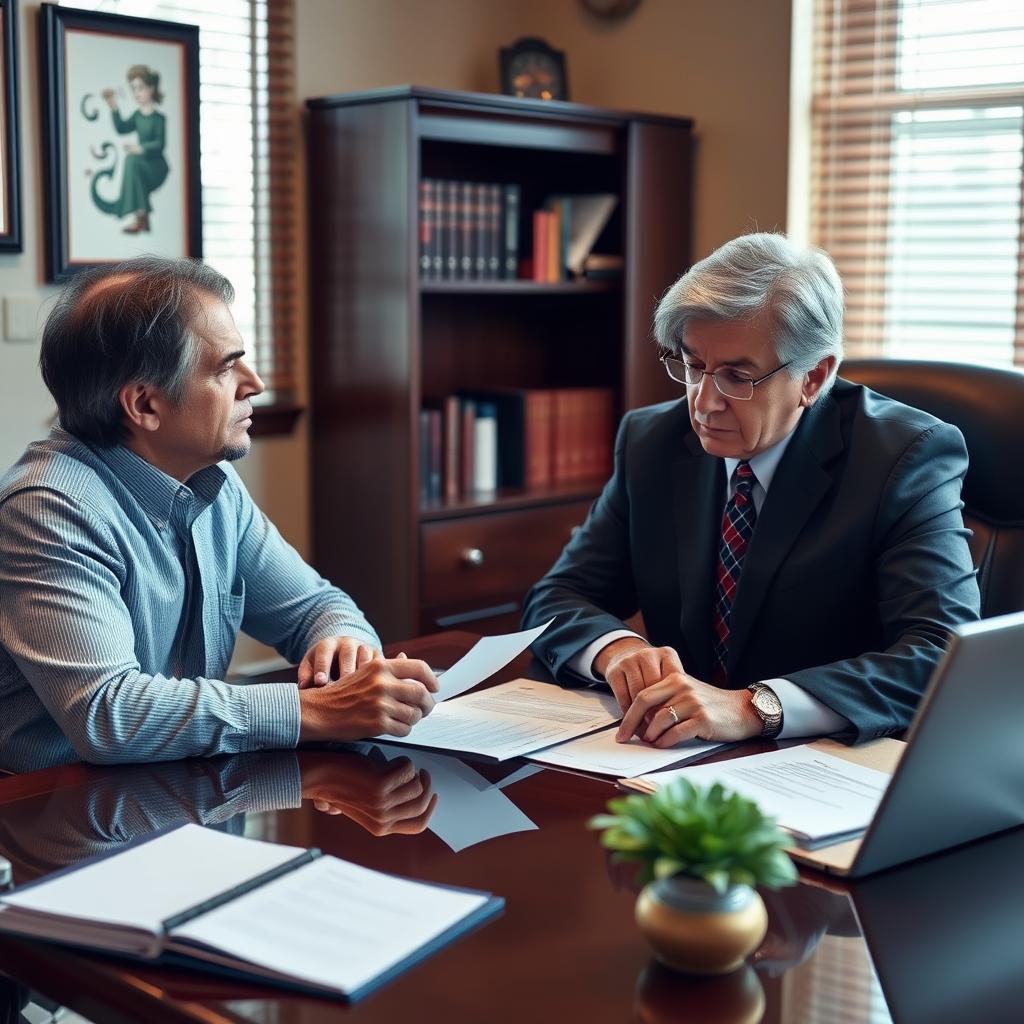
Alimony Modification Lawyer Isle of Wight County, VA
Alimony modification is a legal process that allows either a supporting or supported spouse to request a change to an existing spousal‑support order when circumstances have materially changed since the original order was entered. In Isle of Wight County, Virginia, these matters are heard in the Isle of Wight County Circuit Court or the Isle of Wight County Juvenile and Domestic Relations District Court, depending on the procedural posture of the case. Mr. Sris and his Of Counsel team at Law Offices Of SRIS, P.C. represent clients across Isle of Wight County—including Smithfield, Windsor, and Carrollton—helping them navigate the statutory factors that Virginia courts apply under Va. Code § 20‑107.1. Whether you are seeking a downward modification because of a job loss or a medical hardship, or you need to enforce an existing order, an experienced attorney can evaluate whether your changed circumstances are sufficient to warrant a modification under Virginia law. Reach Law Offices Of SRIS, P.C. at (888) 437‑7747 to schedule a consultation. Law Offices Of SRIS, P.C. – Advocacy Without Borders.
What Alimony Modification Means in Isle of Wight County
Virginia courts have continuing jurisdiction to modify spousal‑support awards when a party demonstrates a material change in circumstances that was not anticipated when the prior order was entered. Alimony modification is not automatic; the moving party bears the burden of proof. In Isle of Wight County, the Isle of Wight County Circuit Court exercises exclusive original jurisdiction over divorce and equitable distribution matters, and therefore hears motions to modify spousal support that were established as part of a final divorce decree. The Isle of Wight County Juvenile and Domestic Relations District Court handles modification matters tied to support orders entered in a J&DR context, including those arising from custody or child‑support proceedings. Both courts sit at 17122 Monument Circle, Suite A, Isle of Wight, VA 23397. The Fifth Judicial District standard applies, and judges apply the thirteen statutory factors enumerated in Va. Code § 20‑107.1 when deciding whether to increase, decrease, or terminate spousal support.
Isle of Wight County includes the historic town of Smithfield, Windsor, and Carrollton, as well as agricultural and waterfront communities that rely on a diverse economy. Changes in employment, cost of living, or health—common reasons a party may seek a modification—must be presented with credible evidence. Virginia is an equitable distribution state, but alimony modification focuses on present financial need and ability to pay, not on property division. The court examines the recipient spouse’s need for support against the payor spouse’s ability to pay, while also considering the duration of the marriage, the standard of living established during the marriage, contributions of each spouse, and any agreements the parties may have made. A property settlement agreement that contains a non‑modifiable provision will generally be enforced unless the parties expressly acknowledged that the provision is subject to modification under the statute. Because Isle of Wight County’s docket is smaller than that of larger metropolitan circuits, hearings may be calendared more quickly, but the timeline for a final ruling still depends on the complexity of the financial evidence and the availability of expert witnesses.
How Mr. Sris and His Of Counsel Handle Alimony Modification Cases
Mr. Sris and his Of Counsel take a measured, evidence‑driven approach to alimony modification. When a client consults the firm, the first step is to gather the original support order, the underlying property settlement agreement, and current financial documentation from both parties. The team then evaluates whether the changed circumstances meet the material‑change threshold under Virginia law. Common factors include a significant and involuntary decrease in the payor’s income, a substantial increase in the recipient’s income or resources, the completion of a rehabilitative plan, or a serious health event that impairs earning capacity. Mr. Sris and his Of Counsel also assess whether a motion to modify could trigger a reciprocal request for a fee award, and they advise clients on the strategic risks of litigation as opposed to mediated or collaborative resolution.
The firm’s approach in Isle of Wight County involves preparing a detailed motion that cites the specific statutory basis for modification and outlines the factual evidence supporting the requested change. Because Virginia courts require full and frank financial disclosure, Mr. Sris and his Of Counsel work with clients to assemble tax returns, pay stubs, bank statements, and, where appropriate, business‑valuation records or medical reports. The firm also coordinates with outside attorneys—such as vocational evaluators or forensic accountants—when the financial picture is complex. In many instances, parties resolve modification disputes through negotiation or mediation without a contested hearing, but when a hearing is necessary, Mr. Sris and his Of Counsel are prepared to present testimony and documentary evidence to the Isle of Wight County Circuit Court or the J&DR Court. Throughout the process, the team keeps the client informed about realistic expectations and the potential range of outcomes that the court could order under Va. Code § 20‑107.1.
In Virginia, a court may modify spousal support upon a showing of a material change in circumstances under Va. Code § 20‑107.1.
Source: Va. Code § 20‑107.1. Virginia Code — Spousal Support Factors
Reviewed by Mr. Sris, admitted in VA/MD/DC/NJ/NY.
About Mr. Sris and His Of Counsel Team
Mr. Sris, Owner and Founder of Law Offices Of SRIS, P.C., has practiced law since 1997 and is admitted in Virginia, Maryland, the District of Columbia, New Jersey, and New York. A former prosecutor, Mr. Sris brings a courtroom‑tested perspective to family law matters. Mr. Sris testified before the Virginia House Courts of Justice Committee in support of 2019 HB 635 (chief patron Del. David Bulova). His Of Counsel team includes attorneys with extensive backgrounds in family law, criminal defense, law enforcement, and complex civil litigation. Together, Mr. Sris and his Of Counsel bring extensive combined legal experience across a broad range of practice areas. Results may vary.
The firm’s Richmond location at 7400 Beaufont Springs Drive, Suite 300, Room 395, Richmond, VA 23225 serves clients throughout central and southeastern Virginia, including Isle of Wight County. Mr. Sris and his Of Counsel regularly appear in the Isle of Wight County Circuit Court and the Isle of Wight County Juvenile and Domestic Relations District Court. All consultations are by appointment only. Reach Law Offices Of SRIS, P.C. at (888) 437‑7747 to schedule a consultation about an alimony modification matter.
Frequently Asked Questions
What constitutes a material change in circumstances for alimony modification in Virginia?
A material change is a significant and unanticipated alteration in the financial or personal circumstances of either spouse since the last support order was entered. Under Va. Code § 20‑107.1, courts look at factors such as involuntary job loss, a substantial increase or decrease in income, lasting disability, the completion of a rehabilitative plan, or a party’s cohabitation in a marriage‑like relationship. The change must not have been foreseeable when the prior order was made, and it must affect the need for support or the ability to pay. The party requesting modification must present credible evidence of the changed circumstances during a hearing in the appropriate Isle of Wight County court.
Which Isle of Wight County court handles alimony modification?
Alimony modification motions are heard in the Isle of Wight County Circuit Court when the original support order was part of a divorce decree; standalone support orders or those entered in the J&DR Court are handled by the Isle of Wight County Juvenile and Domestic Relations District Court. Both courts are located at 17122 Monument Circle, Suite A, Isle of Wight, VA 23397. If you have an existing support order from a different Virginia court, a motion to modify may need to be filed in the court that retains jurisdiction or, in some circumstances, transferred. Mr. Sris and his Of Counsel can determine the correct venue for your matter.
Can alimony be modified if our separation agreement says it is non‑modifiable?
Generally, a court will enforce a valid non‑modifiable provision in a separation agreement, but certain exceptions may apply if the agreement was procured by fraud, duress, or unconscionability, or if the parties expressly stipulated that the provision remains subject to court modification under the statute. Virginia courts respect contractual agreements limiting modification rights, but the language of the agreement is critical. If the agreement explicitly states that the alimony provision is “non‑modifiable except as otherwise provided by law,” the court may entertain a modification motion under Va. Code § 20‑107.1. An experienced attorney can review your agreement and advise whether a modification motion is likely to succeed.
How long does an alimony modification case take in Isle of Wight County?
The timeline for an alimony modification case in Isle of Wight County depends on whether the matter settles or proceeds to a contested hearing. If both parties agree to the proposed modification and submit a consent order, the court may enter the new order within a matter of weeks after filing. Contested matters, however, require scheduling a hearing on the court’s docket, possibly followed by additional hearings if discovery is needed. Complex financial issues—such as business valuations or vocational assessments—can extend the process. Mr. Sris and his Of Counsel can provide a realistic case‑specific timeline during a consultation.
Do I need a lawyer to modify alimony in Isle of Wight County?
You are not legally required to have a lawyer, but alimony modification involves strict legal standards and evidentiary requirements that are challenging to handle without experienced counsel. The moving party must present persuasive evidence of a material change in circumstances, and the financial documentation must comply with Virginia’s discovery rules. Mistakes in the motion or incomplete disclosures can result in denial of the modification or even an award of attorney fees to the other side. A family law attorney can evaluate the strength of your case, prepare the necessary pleadings, and represent you in court. For guidance on your specific situation, reach Law Offices Of SRIS, P.C. at (888) 437‑7747.
What if I cannot afford to pay spousal support anymore?
If your financial circumstances have materially worsened through no fault of your own, you may file a motion to modify spousal support. The payor must demonstrate a genuine inability to pay the ordered amount, supported by proof of reduced income or increased necessary expenses. The court will consider the payor’s efforts to maintain employment and the payor’s overall financial situation, as well as the recipient’s continued needs. Delaying a modification motion can lead to accumulation of arrears that the court may enforce through contempt proceedings. Contact a lawyer as soon as possible to discuss your options. Mr. Sris and his Of Counsel offer consultations by appointment.
Related family law pages: Fairfax County Family Law | Prince William County Family Law | Manassas Family Law | Fairfax City Family Law | Falls Church Family Law
Attorney advertising. Prior results do not guarantee a similar outcome. Case results depend on a variety of factors unique to each case. Attorney responsible for this advertising: Mr. Sris. Results may vary.