
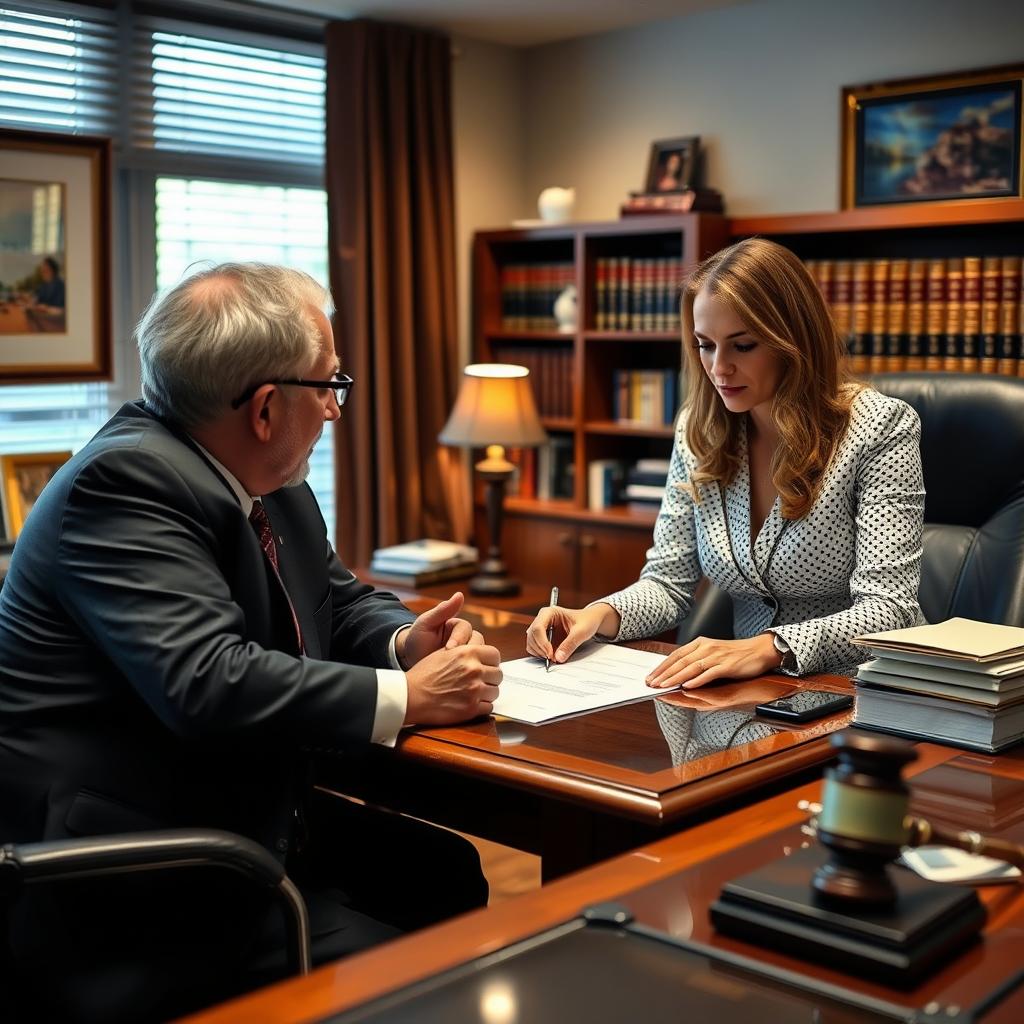
Adultery Divorce Lawyer James City County, VA
Filing for divorce on the ground of adultery in Virginia is a serious decision with significant legal and personal implications. Under Virginia Code § 20‑91(1), adultery is a fault‑based ground that allows a spouse to seek an immediate divorce without waiting through a mandatory separation period. In James City County, divorce and equitable distribution matters are heard in the James City County Circuit Court, located at 5201 Monticello Avenue, Suite 4, Williamsburg, Virginia. Law Offices Of SRIS, P.C., founded in 1997, assists clients in James City County with adultery‑divorce cases through its Richmond Location. Mr. Sris and his Of Counsel understand the evidentiary requirements, procedural rules, and potential consequences of establishing adultery, and they work to present a clear and well‑supported case. To discuss your situation and learn how a fault‑based filing might affect property division, spousal support, or child custody, call (888) 437‑7747 to request a consultation. Law Offices Of SRIS, P.C. – Advocacy Without Borders.
What Adultery Divorce Means in James City County, Virginia
An adultery divorce in Virginia is an absolute divorce granted when one spouse proves the other spouse committed adultery. The statute, Va. Code § 20‑91(1), treats adultery as a fault ground, meaning the innocent spouse may file a Complaint for divorce without the six‑month or one‑year separation periods required for a no‑fault divorce. James City County Circuit Court has exclusive jurisdiction to hear divorce suits and to decide all related issues, including equitable distribution of marital property, spousal support, and, when incidental to the divorce, child custody and visitation. Separate custody, support, or protective‑order actions may also be brought in the James City County Juvenile and Domestic Relations District Court, but the divorce decree itself must come from the Circuit Court.
Virginia is an equitable distribution state. Under Va. Code § 20‑107.3, the court classifies property as separate, marital, or hybrid, and then divides marital assets fairly—but not necessarily equally—using eleven statutory factors. Adultery can influence the court’s distribution decision if the marital fault is connected to the financial circumstances of the parties. For example, a spouse who used marital funds to further an extramarital relationship may see that conduct affect the division of property or an award of spousal support. However, adultery does not automatically result in a particular property split; each case turns on its specific facts.
Practitioners who appear in the James City County Circuit Court become familiar with local procedures, including the requirement that every divorce be supported by corroborating evidence. In an adultery case, the plaintiff must present clear and convincing evidence of both the adulterous relationship and the opportunity and inclination to commit adultery. This is often achieved through witness testimony, documentary evidence, and sometimes the testimony of the defendant. Mr. Sris and his Of Counsel team help clients evaluate the available evidence and determine whether pursuing an adultery ground is strategically and practically advisable.
How Mr. Sris and His Of Counsel Handle Adultery Divorce Cases
Mr. Sris and his Of Counsel approach adultery‑divorce matters with careful attention to the evidentiary demands and the sensitive nature of these cases. The process typically begins with a consultation to assess the client’s goals, review potential evidence, and explain the legal standards that must be met. If the decision is made to proceed on the ground of adultery, the firm prepares and files the divorce Complaint in the James City County Circuit Court, effectuates service of process on the defendant, and addresses any immediate needs—such as temporary support or custody—through pendente lite motions when appropriate.
Discovery often plays a central role. Depositions, interrogatories, and document requests may be used to gather information about finances, third‑party relationships, and any dissipation of marital assets. Where warranted, the firm works with forensic accountants, private investigators, and other professionals who can assist in building the evidentiary record without making guarantees about the outcome. Throughout the process, Mr. Sris and his Of Counsel keep clients informed of the procedural timeline, which varies according to court scheduling, case complexity, and the opposing party’s posture. The firm’s objective is to present a thorough case while respecting the emotional strain that accompanies a fault‑based divorce.
About Mr. Sris and His Of Counsel Team
Mr. Sris, Owner and Founder of Law Offices Of SRIS, P.C., is a former prosecutor who has practiced since 1997. His background in trial work provides insight into building evidentiary cases and examining witnesses—skills that translate directly to fault‑based divorce litigation. Mr. Sris testified before the Virginia House Courts of Justice Committee in support of 2019 HB 635 (chief patron Del. David Bulova). He is admitted to practice in Virginia, Maryland, the District of Columbia, New Jersey, and New York.
Mr. Sris and his Of Counsel bring extensive combined legal experience to family law matters. Results may vary. The firm’s attorneys work collaboratively to address each client’s circumstances, drawing on practical courtroom experience and familiarity with the judges and procedures of the James City County Circuit Court.
Frequently Asked Questions
What are the grounds for an adultery divorce in Virginia?
Virginia Code § 20‑91(1) permits an absolute divorce on the ground of adultery when the plaintiff proves the defendant committed adultery. Unlike a no‑fault divorce, an adultery‑based filing does not require the spouses to have lived separate and apart for any length of time before filing. The plaintiff may initiate the divorce as soon as the adultery is discovered and sufficient evidence is available. The case must be brought in the circuit court of the county or city where either party resides, and at least one party must have been a resident and domiciliary of Virginia for six months.
Do I need to prove adultery to get a divorce in James City County?
If you wish to obtain a divorce on the specific ground of adultery, Virginia law requires you to present clear and convincing evidence that the other spouse committed adultery. This is a higher standard than the “preponderance of the evidence” standard used in most civil cases. If proving adultery is not feasible, you may still pursue a no‑fault divorce after the applicable separation period—six months if there are no minor children and the parties have a signed separation agreement, or one year in other cases. Mr. Sris and his Of Counsel help clients evaluate which ground best fits their circumstances and the available proof.
How does adultery affect property division in Virginia?
Adultery can influence the equitable distribution of marital property if the court finds that the fault directly affected the marital estate. Virginia courts consider eleven factors under Va. Code § 20‑107.3, one of which is the circumstances and factors that contributed to the dissolution of the marriage. Adultery is not an automatic penalty, but it may weigh in the distribution if, for instance, marital assets were spent on an extramarital relationship. Separate property—assets owned before marriage or acquired by gift or inheritance—is not divided. Each case turns on the specific financial record.
Can adultery impact child custody in James City County?
Adultery alone does not determine child custody; Virginia courts decide custody based on the best interests of the child under Va. Code § 20‑124.3. The statute lists ten factors the court must consider, including the relationship between the child and each parent, each parent’s ability to meet the child’s needs, and any history of family abuse. Adulterous conduct may become relevant if it demonstrates that a parent’s lifestyle places the child at risk or impairs parenting ability. The James City County Juvenile and Domestic Relations District Court handles standalone custody matters; custody issues within a divorce are decided by the Circuit Court.
Do I need a lawyer for an adultery divorce in James City County?
While you are not legally required to have an attorney, an adultery divorce involves complex evidentiary requirements and procedural rules that are difficult to navigate without experienced counsel. The plaintiff must meet a high standard of proof, properly serve the defendant, and comply with all local court rules and filing deadlines. Mr. Sris and his Of Counsel handle these cases on a regular basis and can help you make informed decisions about whether to proceed on a fault ground, how to gather and present evidence, and what outcomes to realistically expect. For guidance on your specific situation, reach Law Offices Of SRIS, P.C. at (888) 437‑7747.
How do I start an adultery divorce in James City County?
You begin by filing a Complaint for divorce with the James City County Circuit Court and serving the defendant with a copy of the Complaint and a summons. The Complaint must state the ground of adultery and the jurisdictional facts, including that at least one party has been a resident and domiciliary of Virginia for at least six months. After filing, the case moves through discovery, potential pendente lite motions for temporary support or custody, and ultimately trial or settlement. The firm’s Richmond Location assists clients throughout this process. To discuss the steps for your matter, contact Law Offices Of SRIS, P.C. at (888) 437‑7747.
Related Family Law Services
Williamsburg Family Law Lawyer |
York County Family Law Lawyer |
Fairfax County Family Law Lawyer |
Fairfax City Family Law Lawyer
Virginia Legal Resources
Virginia Code Title 20 (Domestic Relations) |
Virginia Judicial System
Attorney advertising. Prior results do not guarantee a similar outcome.
Results may vary.
Case results depend on a variety of factors unique to each case.