
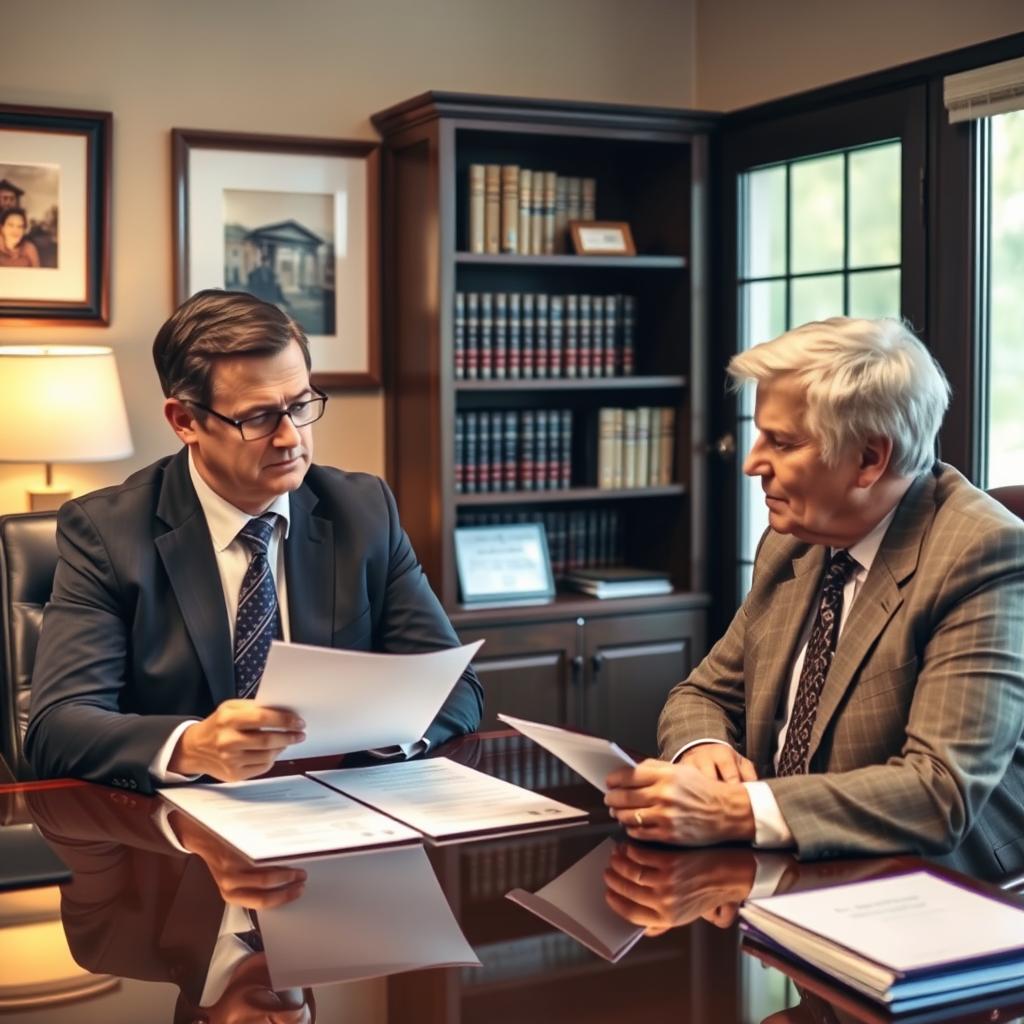
Postnuptial Agreement Lawyer Isle of Wight County, VA
Postnuptial agreements are not a reflection of a failing marriage. They are a practical tool for couples in Isle of Wight County who want to establish clear financial expectations after they have already married. Whether you have come into an inheritance, started a business, or simply want to define property and support terms outside the default equitable distribution framework, an enforceable postnuptial agreement can provide certainty and reduce conflict. Mr. Sris and his Of Counsel team work with clients throughout Smithfield, Windsor, Carrollton, and the surrounding communities to draft and review these agreements. Reach Law Offices Of SRIS, P.C. at (888) 437-7747 to request a consultation. Law Offices Of SRIS, P.C. – Advocacy Without Borders.
How Postnuptial Agreements Work in Isle of Wight County
Unlike a prenuptial agreement—signed before the marriage—a postnuptial agreement is executed after the wedding. Virginia courts evaluate these agreements under general contract principles and the same fairness standards that apply to any marital agreement. The agreement must be entered into voluntarily, with full financial disclosure from both sides, and its terms must not be unconscionable at the time of execution. The Isle of Wight County Circuit Court, located at 17122 Monument Circle in Isle of Wight, handles property division and spousal support matters within a divorce context; a postnuptial agreement can define those terms in advance, potentially shortening the litigation timeline if the marriage ends.
A postnuptial agreement may address a wide range of financial topics, from classifying certain assets as separate property to setting spousal support parameters. It cannot, however, determine child custody or child support—those issues remain subject to the court’s review under the trusted-interests standard. Mr. Sris and his Of Counsel concentrate their practice on family law and can explain how Virginia’s equitable distribution statute interacts with privately agreed-upon terms.
Frequently Asked Questions
Q: What is a postnuptial agreement?
A postnuptial agreement is a legally binding contract between spouses that outlines the division of property, debts, and spousal support in the event of divorce or separation. It differs from a prenuptial agreement only in timing: a postnup is signed after marriage, while a prenup is signed before. In Virginia, these agreements are governed by general contract law and can address any matter related to the parties’ financial rights and obligations, provided they are executed with full disclosure and without coercion.
Q: Are postnuptial agreements enforceable in Virginia?
Yes, postnuptial agreements are enforceable in Virginia if they meet the same fundamental fairness requirements that apply to all marital contracts. The parties must have entered into the agreement voluntarily, both must have made a complete and fair disclosure of their assets and liabilities, and the terms must not be so one-sided as to be unconscionable. If a spouse challenges the agreement’s validity, the court will examine these factors closely. An experienced lawyer can help ensure the agreement is structured to withstand judicial scrutiny.
Q: How does a postnuptial agreement differ from a separation agreement?
A postnuptial agreement is signed while the couple remains married and typically does not immediately trigger a divorce or separation. A separation agreement, by contrast, is executed when the parties have decided to separate or are already living apart and resolves all issues arising from the marital dissolution. While both documents may cover property division and support, a postnup is forward-looking and aims to establish financial expectations during the marriage; a separation agreement is a final settlement of marital rights.
Q: Do I need a lawyer to draft a postnuptial agreement in Isle of Wight County?
You are not legally required to hire a lawyer to draft a postnuptial agreement, but legal representation is strongly recommended because the enforceability of the agreement depends on compliance with Virginia law. A lawyer can identify potential issues—such as insufficient disclosure or ambiguous language—that might later be challenged. Mr. Sris and his Of Counsel have extensive experience with marital agreements and can walk you through the requirements under Va. Code Title 20 to help protect your interests.
Q: Can a postnuptial agreement address spousal support in Isle of Wight County?
Yes, a postnuptial agreement can set spousal support terms, including a waiver or modification of support. However, Virginia courts retain the authority to review spousal support waivers for fairness, especially if enforcement would leave one spouse unable to meet basic needs. The agreement should be drafted with precise language and supported by a showing that both parties understood the rights they were giving up at the time of signing.
Q: What happens if one spouse did not disclose all assets before signing?
If a spouse fails to make a complete and accurate financial disclosure, the agreement may be set aside by the court. Virginia law requires full and fair disclosure for a marital agreement to be enforceable. Even an innocent omission can create grounds for a challenge. Working with an attorney to prepare a thorough disclosure schedule is one way to reduce the risk of later disputes.
Q: Can a postnuptial agreement be modified or revoked?
Yes, a postnuptial agreement can be modified or revoked at any time by mutual consent of both spouses, as long as the modification or revocation is in writing and signed by both parties. Unilateral revocation is not permitted, and the same standards of voluntariness and disclosure apply to any amendment. If the parties later divorce, the agreement remains effective unless the court finds it invalid for the reasons described above.
Q: How long does it take to finalize a postnuptial agreement?
The timeframe for completing a postnuptial agreement varies depending on the complexity of the couple’s finances and the level of negotiation required. A straightforward agreement may be drafted and signed within a few weeks after both parties have received legal advice. More detailed agreements, especially those involving business holdings or significant separate property, may require additional time for valuation and disclosure. Reaching Law Offices Of SRIS, P.C. Early can help set realistic expectations.
Q: What if my spouse refuses to sign a postnuptial agreement?
No one can be forced to sign a postnuptial agreement; it is purely a voluntary contract. If your spouse is unwilling, you may still explore other legal tools—such as a separation agreement if you are already contemplating divorce. Speaking with an attorney can clarify your options based on your specific family and financial situation.
Q: How do I start the process of getting a postnuptial agreement in Isle of Wight County?
Contact a family law attorney at Law Offices Of SRIS, P.C. for a consultation. During the consultation, you can discuss your goals, your financial holdings, and any concerns about enforceability. The firm’s Richmond location serves clients throughout Isle of Wight County. Call (888) 437-7747 to request an appointment.
About Mr. Sris and His Of Counsel Team
Mr. Sris, Owner and Founder of Law Offices Of SRIS, P.C., has concentrated his practice on family law since founding the firm in 1997. He is a former prosecutor and is admitted in Virginia, Maryland, the District of Columbia, New Jersey, and New York. His Of Counsel team includes attorneys with additional backgrounds in litigation, contract analysis, and family law—all working together to handle postnuptial agreement matters in Isle of Wight County. Together, Mr. Sris and his Of Counsel bring extensive combined legal experience. Results may vary.
For additional reading: Family Law Lawyer Fairfax County, Prince William County Family Law, Manassas Family Law Attorney. Visit our Virginia family law hub for broader resources.
Attorney advertising. Prior results do not guarantee a similar outcome.
Case results depend on a variety of factors unique to each case.