
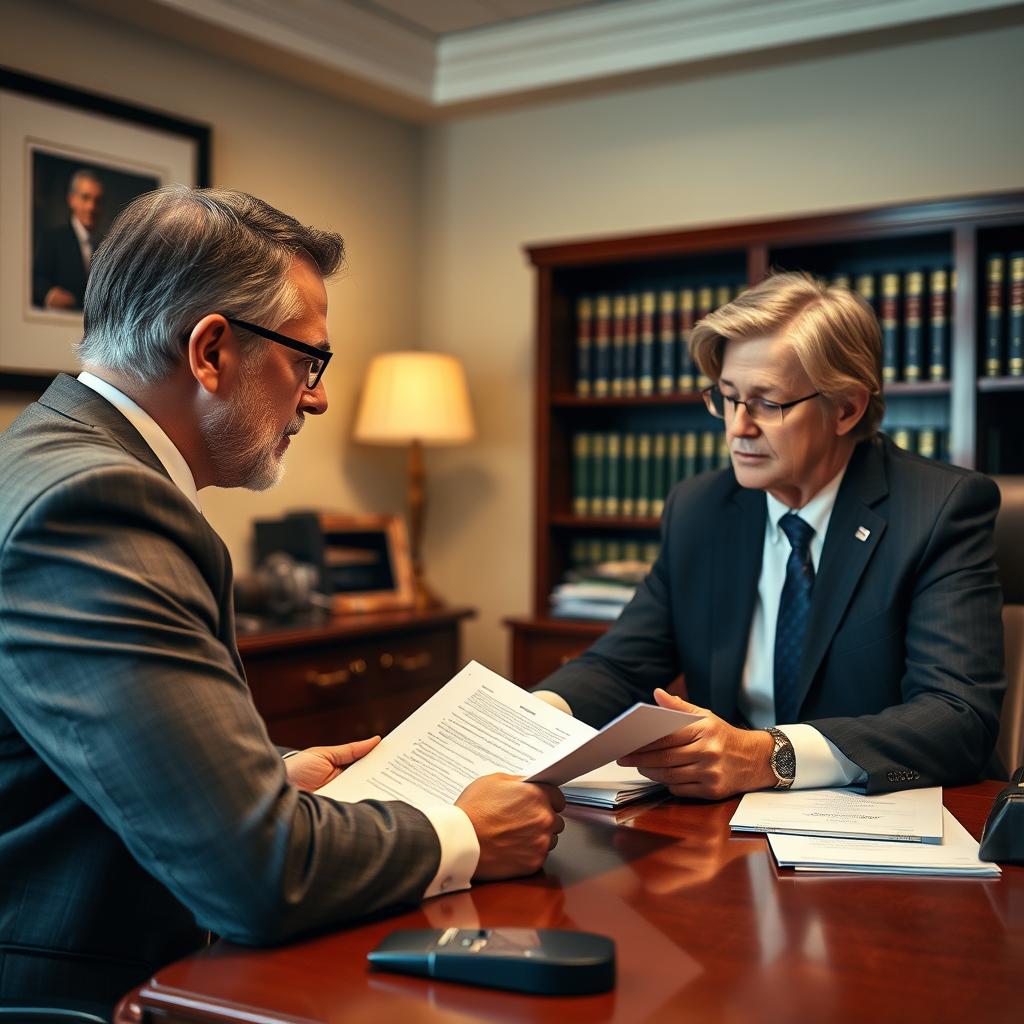
Desertion Divorce Lawyer Poquoson, VA
When a spouse leaves the marital home without consent and with the intent to abandon the marriage, Virginia law permits the other spouse to seek a divorce on the fault ground of desertion. In Poquoson, an independent city along the Chesapeake Bay where family ties run deep and community life centers on a small-town rhythm, the decision to pursue a fault-based divorce is rarely taken lightly. A desertion divorce requires the filing spouse to prove that the other spouse willfully deserted or abandoned the marriage for a continuous period of at least one year, a standard set forth under Va. Code § 20‑91. For Poquoson residents, the Poquoson Circuit Court at 500 City Hall Avenue has exclusive jurisdiction over divorce actions, while separate custody, support, and protective‑order matters may be heard in the Poquoson Juvenile and Domestic Relations District Court. Mr. Sris and his Of Counsel represent clients in both courts, working to protect parental rights, marital property, and long‑term stability. To speak with a desertion divorce lawyer serving Poquoson, contact Law Offices Of SRIS, P.C. at (888) 437‑7747. Law Offices Of SRIS, P.C. – Advocacy Without Borders.
What Desertion Divorce Means in Poquoson, Virginia
Desertion, also called abandonment, is one of several fault grounds for a bond of matrimony divorce in Virginia. To obtain a divorce on this ground, the spouse who was left must show that the other spouse’s departure was voluntary, without justification, and intended to end the marital relationship permanently. The law does not require the departing spouse to move far away—a spouse may desert the marriage while still living in Poquoson if he or she has abandoned the duties of marriage and intends to remain apart. However, mere physical separation is not enough; the evidence must demonstrate the willful breaking off of the marital relationship for an unbroken period of at least one year.
Because Poquoson Circuit Court handles desertion divorces, local residents file their complaints in that court, which sits within Virginia’s Eighth Judicial District. The court applies the same statutory framework as other Virginia circuit courts but operates within the practical rhythms of a waterfront community where many families have generational roots. Desertion claims often intersect with questions of child custody, spousal support, and the equitable distribution of marital property under Va. Code § 20‑107.3. A desertion finding can affect those determinations, including how the court weighs the circumstances that led to the breakdown. Our firm regularly appears before the Poquoson courts and understands the procedural posture these cases take, from the filing of a complaint to the final decree.
How Mr. Sris and His Of Counsel Handle Desertion Divorce Cases
Desertion cases require methodical factual development because the burden of proof rests on the spouse alleging abandonment. Mr. Sris and his Of Counsel focus on gathering records, communications, financial documents, and witness statements that demonstrate the duration and character of the separation. The team then determines whether the facts support a desertion claim or whether an alternative path—such as a no‑fault divorce after a period of separation—would serve the client’s overall objectives better. Every potential ground is evaluated against the need to resolve custody, support, and property division efficiently.
Once a desertion complaint is filed in Poquoson Circuit Court, procedural steps follow the local docket. Temporary orders governing custody, support, or use of the family home may be sought early in the case under Va. Code § 20‑103 if immediate relief is warranted. Discovery, settlement discussions, and, where necessary, trial preparation proceed under the supervision of the court. Throughout the process, Mr. Sris and his Of Counsel maintain a focus on achieving a resolution that secures the client’s rights while avoiding unnecessary acrimony. Because desertion divorces often involve emotional complexity, the team works closely with clients to keep expectations realistic and to identify practical steps forward.
About Mr. Sris and His Of Counsel Team
Mr. Sris, Owner and Founder of Law Offices Of SRIS, P.C., is a former prosecutor who has practiced law since 1997. His background includes testifying before the Virginia House Courts of Justice Committee in support of 2019 HB 635 (chief patron Del. David Bulova), giving him direct familiarity with the legislative process that shapes Virginia’s equitable distribution statute. He is admitted to practice in Virginia, Maryland, the District of Columbia, New Jersey, and New York, and he brings a multi‑state perspective to family law matters while concentrating on the practical needs of Virginia families.
Mr. Sris’s Of Counsel—attorneys engaged through Excella—contribute experience in family law, litigation, and related areas without being employees of the firm. Together, Mr. Sris and his Of Counsel bring practical experience to divorce matters, including contested desertion claims, custody modifications, and spousal support negotiations. They appear regularly in the Poquoson courts and work toward outcomes that respect the full scope of each client’s personal and financial circumstances.
Frequently Asked Questions
What is a desertion divorce in Virginia?
Desertion divorce is a fault‑based divorce available when one spouse willfully leaves the marriage without the consent of the other and remains apart for one year or more, intending to end the marriage. The departing spouse must have acted voluntarily and without legal justification. The one‑year period runs uninterrupted, after which the deserted spouse may file a complaint in the circuit court where either party resides. If the necessary proof is established, the court may grant a divorce from the bond of matrimony on the ground of desertion.
How do I prove desertion in a Poquoson divorce case?
Proving desertion requires evidence that the other spouse left the marital home voluntarily, with the intent to end the marriage, and that the separation lasted for at least one continuous year. Documentation can include correspondence, financial records showing separate residences, witness testimony, and any statements by the departing spouse expressing an intent not to return. Because the burden falls on the spouse alleging desertion, gathering clear evidence early is important. Mr. Sris and his Of Counsel assist clients in identifying and preserving the records needed to present a desertion claim to the Poquoson Circuit Court.
Can a spouse who moved out of the Poquoson home still be charged with desertion?
Yes, leaving the Poquoson marital residence without consent and with no intention of resuming the marriage can support a desertion claim even if the spouse remains in the same city. The key element is the willful breaking off of the marital relationship, not geographic distance. A spouse who moves into another home in Poquoson or a neighboring community while refusing to cohabitate or fulfill marital duties may still be found to have deserted the marriage. Each case turns on the specific facts and evidence of intent.
How does desertion affect property division and alimony?
Virginia is an equitable distribution state, so a desertion finding does not automatically alter the division of marital property, but the circumstances surrounding the desertion may influence the court’s decision. Under Va. Code § 20‑107.3, the court considers factors including the circumstances that contributed to the dissolution of the marriage. A finding of desertion can weigh into those considerations. Similarly, when setting spousal support, the court evaluates the needs and abilities of each party, and fault may be relevant to the amount and duration of support. However, no single factor guarantees a particular outcome.
Do I need a lawyer for a desertion divorce in Poquoson?
While you are not required to retain a lawyer, desertion divorces involve significant legal and evidentiary challenges that benefit from experienced representation. Because desertion is a fault ground, the spouse filing must present sufficient proof; procedural missteps or incomplete evidence can delay or defeat the claim. Additionally, custody, support, and property issues often overlap in these cases. Mr. Sris and his Of Counsel handle desertion matters in Poquoson courts and can help you understand your options. Call (888) 437‑7747 to schedule a consultation.
What if my spouse denies desertion?
When a spouse denies desertion, the issue becomes a contested matter at trial, and the spouse alleging desertion must present testimony and supporting documentation to meet the burden of proof. The Poquoson Circuit Court will evaluate the evidence and decide whether the separation was voluntary and intended to end the marriage. If the evidence falls short, the court will not grant the divorce on that ground. However, if the parties have been separated for the required statutory period, a no‑fault divorce may still be available. Mr. Sris and his Of Counsel prepare cases for the possibility of a contested hearing while also exploring alternative grounds that could resolve the matter more efficiently.
Additional Virginia Family Law Resources
Family Law Lawyer Richmond, VA
Family Law Lawyer Hampton, VA
Family Law Lawyer Newport News, VA
Family Law Lawyer York County, VA
Family Law Lawyer Fairfax County, VA
Virginia Primary‑Source References
Virginia Code Title 20 – Domestic Relations
Poquoson Circuit Court
Virginia Judicial System
Attorney advertising. Prior results do not guarantee a similar outcome. Results may vary.
Case results depend on a variety of factors unique to each case.